
Why Did China Stop Excavating the Terracotta Warriors?
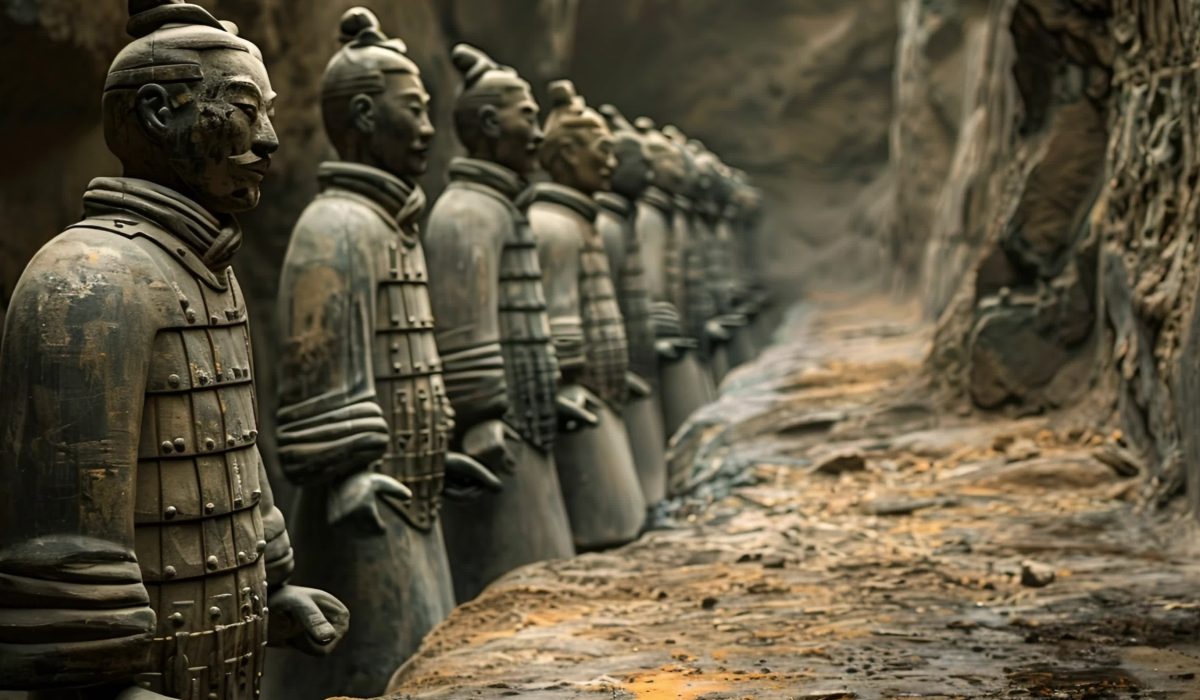
Standing at the Terracotta Warriors site, you are witnessing one of history’s greatest archaeological mysteries. While around 2,000 soldiers are on display, thousands more remain buried. So why did archaeologists stop excavating? The answer lies in four key factors: limits in preservation technology, the immense cost and scale, potential mercury hazards, and cultural respect for the emperor’s tomb.
1. The Limits of Modern Technology
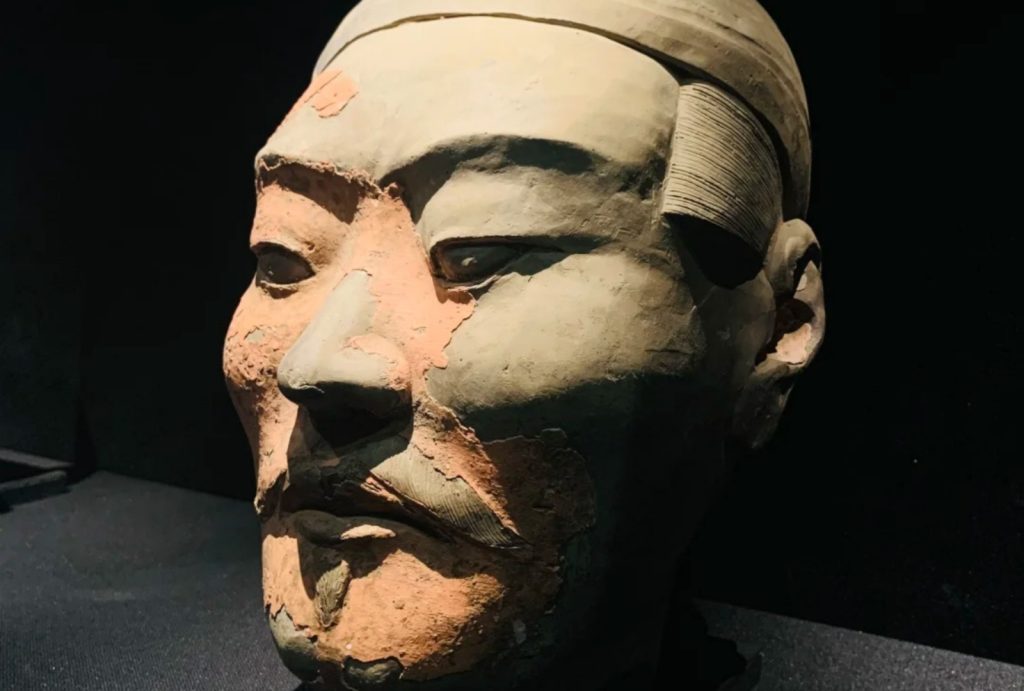
When the Terracotta Army was first discovered, many warriors emerged wearing vivid, beautiful colors. However, archaeologists quickly learned a harsh truth: once exposed to dry air, the ancient paint flaked off in just a few minutes, turning a technicolor masterpiece into plain grey clay. This is the primary reason why the Terracotta Warriors lost their color.
Beyond losing their color, the newly unearthed figures also face threats from mold, oxidation, and humidity changes. Because modern technology cannot yet fully preserve these relics upon exposure to air, archaeologists believe the surrounding soil remains the best protection. They are delaying deeper excavations until advanced preservation technology is available.
2. The Monumental Scale and Cost
It is easy to underestimate the size of Emperor Qin Shi Huang’s Mausoleum. The entire necropolis covers a staggering 56 square kilometers (nearly the size of Manhattan).
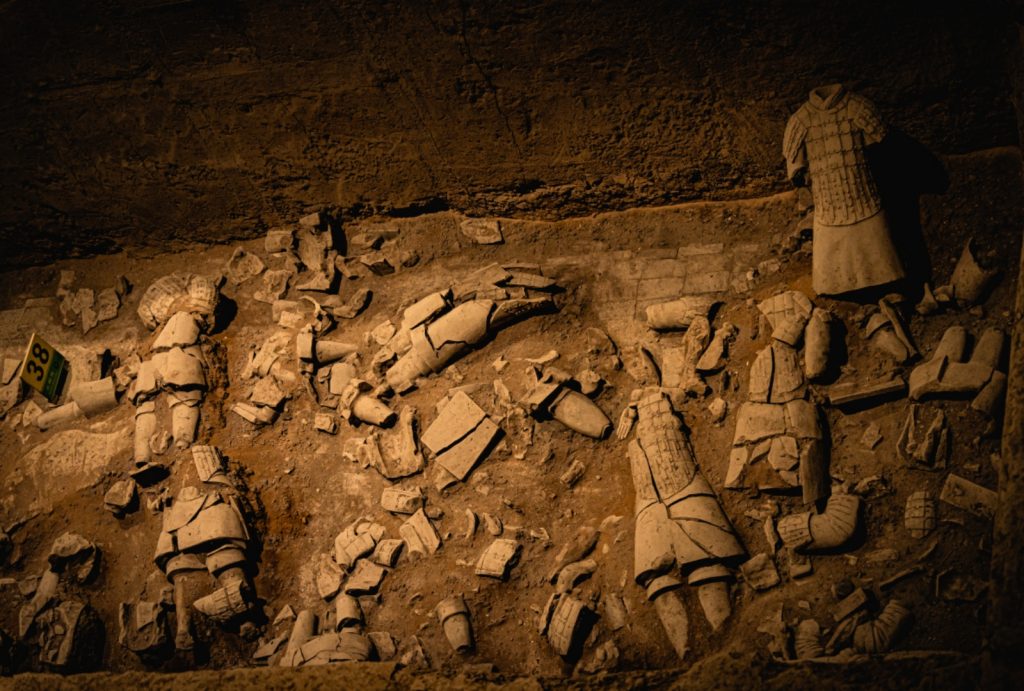
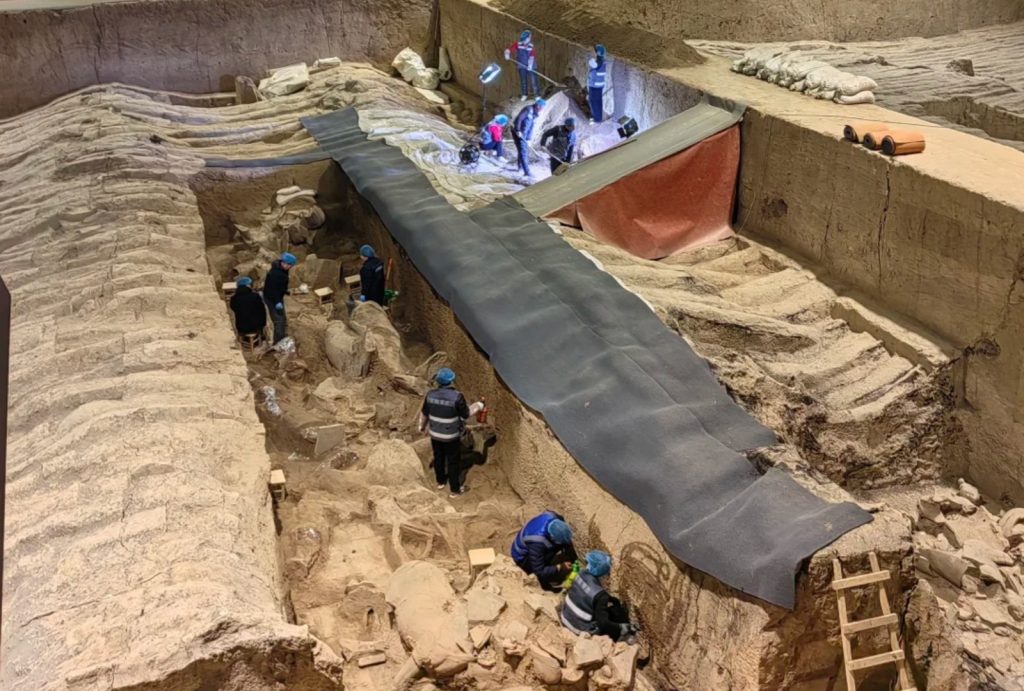
Excavation is only the beginning. Most warriors are discovered shattered, and restoring a single figure can take months of meticulous work to clean, repair, and glue just one single soldier back together. Excavating the entire site would require decades of non-stop labor by thousands of specialists, plus the construction of massive, climate-controlled museums to house them. Currently, it is simply beyond practical limits.
3. The Physical Danger
Ancient Chinese history books, specifically the Records of the Grand Historian written by Sima Qian, describe the Emperor’s tomb as an underground palace filled with booby traps and rivers of liquid mercury. For a long time, people thought this was just a myth. However, modern soil tests have found unusually high levels of toxic mercury around the tomb mound. Opening the tomb today could release toxic mercury vapor, posing serious health risks to archaeologists and the surrounding environment. This physical danger is a major reason why the main tomb remains sealed.
4. Respect for the Imperial Resting Place
In Chinese tradition, ancient tombs are sacred resting places that deserve respect. Today, China follows a strict archaeological rule called “rescue excavation.” This means a site is only dug up if it is threatened by city construction, looting, or natural disasters. Since the tomb remains stable and protected, there is no urgency to excavate, reinforcing the principle of preservation over disturbance. Respect for cultural values and the emperor’s intended eternal rest plays an important role in keeping the tomb sealed.
What Are Archaeologists Doing Now? Inside the “Terracotta Hospital”
If you’re wondering what archaeologists are doing now that large-scale excavation has slowed, head to the back of Pit 1. You’ll find an active restoration area, affectionately known as the “Terracotta Hospital”, where newly unearthed warriors are carefully cleaned, repaired, and stabilized.
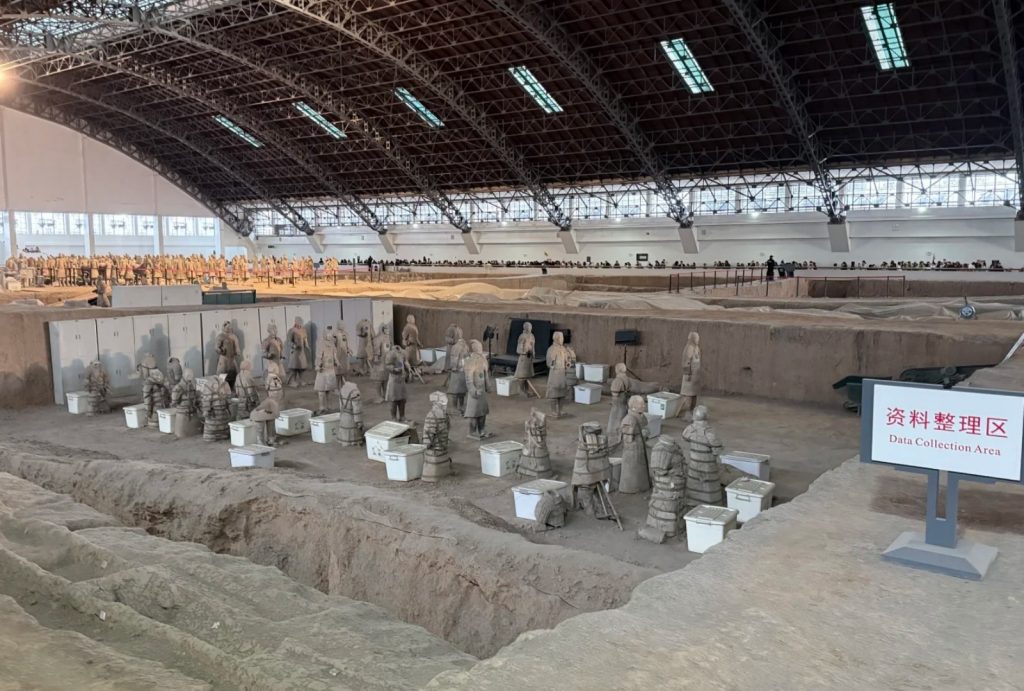
Here’s why this “hospital” proves they can’t simply dig up the remaining 6,000 soldiers overnight:
- When fragments of a warrior are excavated, they are carefully laid out on long tables. A restoration specialist may spend three to six months reconstructing just one figure from hundreds of broken pieces.
- Every warrior is unique—different facial features, armor details, and posture. Experts use modern adhesives and internal supports to rebuild them, often stabilizing the figures for weeks while materials cure.
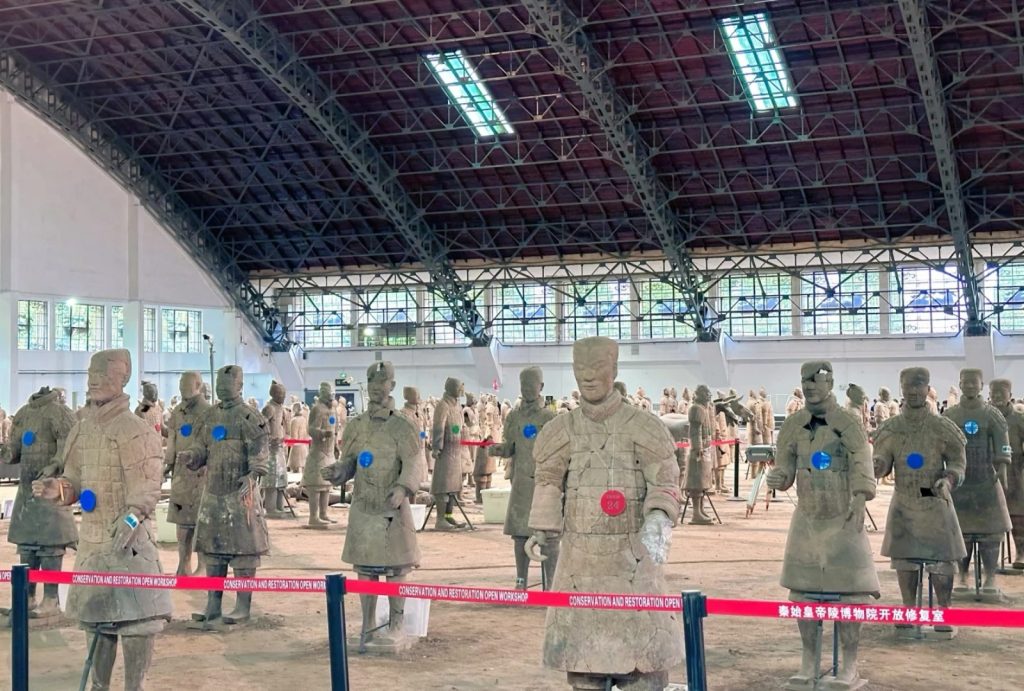
The true charm of visiting the Terracotta Warriors lies in discovering what still lies hidden beneath your feet. China did not halt excavations because it had given up, but rather to preserve history. They chose patience over curiosity. The unexcavated dirt mounds you see inside the museum are not just empty spaces—they are safe time capsules. The remaining warriors and the Emperor’s tomb are waiting in the dark, resting safely until future technology is finally ready to wake them up.