


What Happened to the Terracotta Army After the Qin Dynasty Fell?
The Terracotta Army is a world-famous archaeological wonder, featuring thousands of life-sized soldiers and real weapons buried to protect the first emperor of China. Only a few years after the emperor’s death, the empire collapsed in rebellion and civil war. What exactly happened to the Terracotta Warriors after the fall of the Qin Dynasty? This guide reveals the dramatic fate of the Terracotta Warriors—from violent destruction and centuries of silence to their amazing rediscovery.
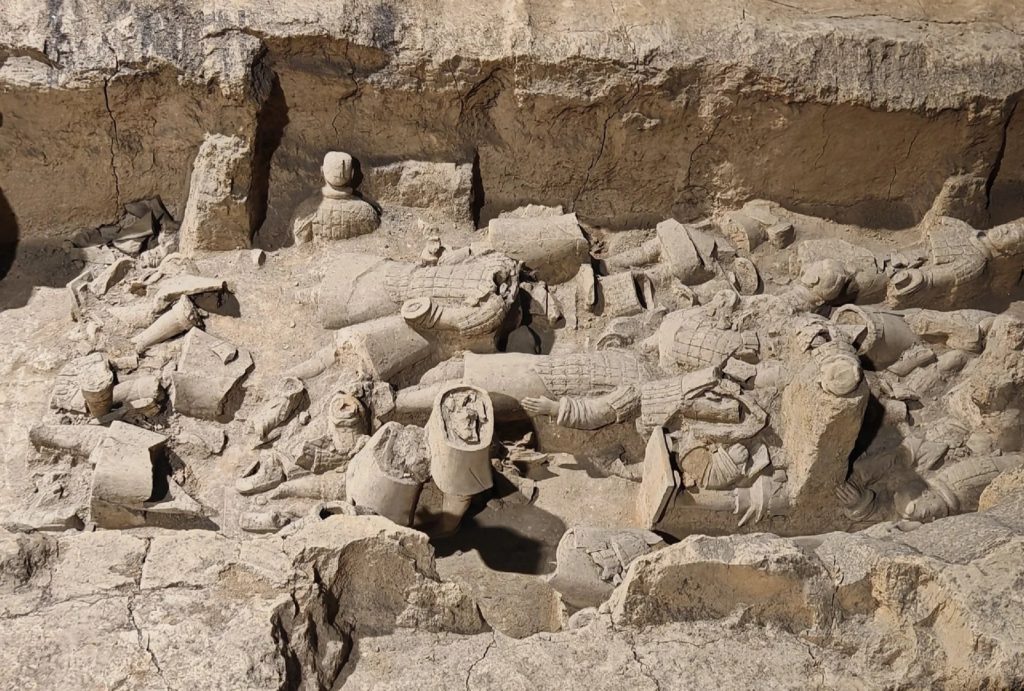
Terracotta Army: How did the Qin Dynasty fall?
The Qin Dynasty unified China in 221 BCE, creating one of the most powerful states of the ancient world. However, the empire’s power lasted only 15 years.
The Death of Qin Shi Huang
In 210 BCE, Qin Shi Huang died unexpectedly while traveling. His death triggered political instability inside the imperial court. Power struggles between officials and royal family members weakened the central government almost immediately. Without the emperor’s authority, the rigid system that had held the empire together began to fracture.
Rebellion and Civil War
Qin Shi Huang forced millions of farmers to build massive projects, while the heavy taxes and harsh laws had long aroused public discontent. the people rebelled right after Emperor Qin Shi Huang’s death. Led by powerful generals like Xiang Yu, the empire quickly collapsed into a brutal civil war. In the chaos of war, the palaces, cities, and the emperor’s vast mausoleum complex of the Qin Dynasty may have suffered fierce attacks and destruction.
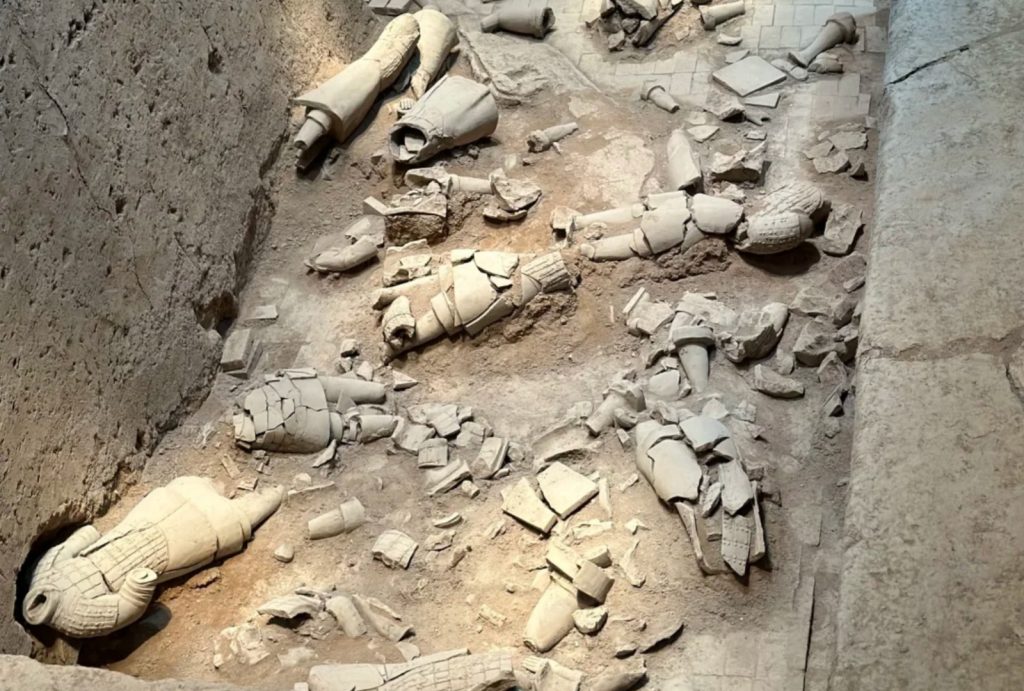
Was the Terracotta Army Attacked?
Yes. Archaeological evidence suggests that the Terracotta Army did not remain untouched after the collapse of the Qin Dynasty. When archaeologists excavated the pits in the 20th century, they discovered that many of the statues were broken into pieces. Some pits contained thousands of fragments scattered across the ground. This damage did not appear to be caused by natural aging alone.
Researchers found several clues indicating that the site had suffered violent destruction in ancient times:
- Missing Weapons: The clay soldiers were originally armed with thousands of real bronze weapons. However, when experts excavated the pits, they found that most of the large, valuable weapons—like heavy swords and spearheads—were completely gone. A widely accepted historical theory is that rebel forces broke in to steal the emperor’s vast arsenal to supply their own armies.
- Burn Marks and Ashes: The pits were originally built with massive wooden roofs. During excavation, archaeologists found thick layers of ash and charcoal, confirming the site was set ablaze. As the burning roofs collapsed, they crushed the clay army below. If you look closely today, you can still spot dark, charred burn marks on some of the surviving warriors in Pit 1 and Pit 2.
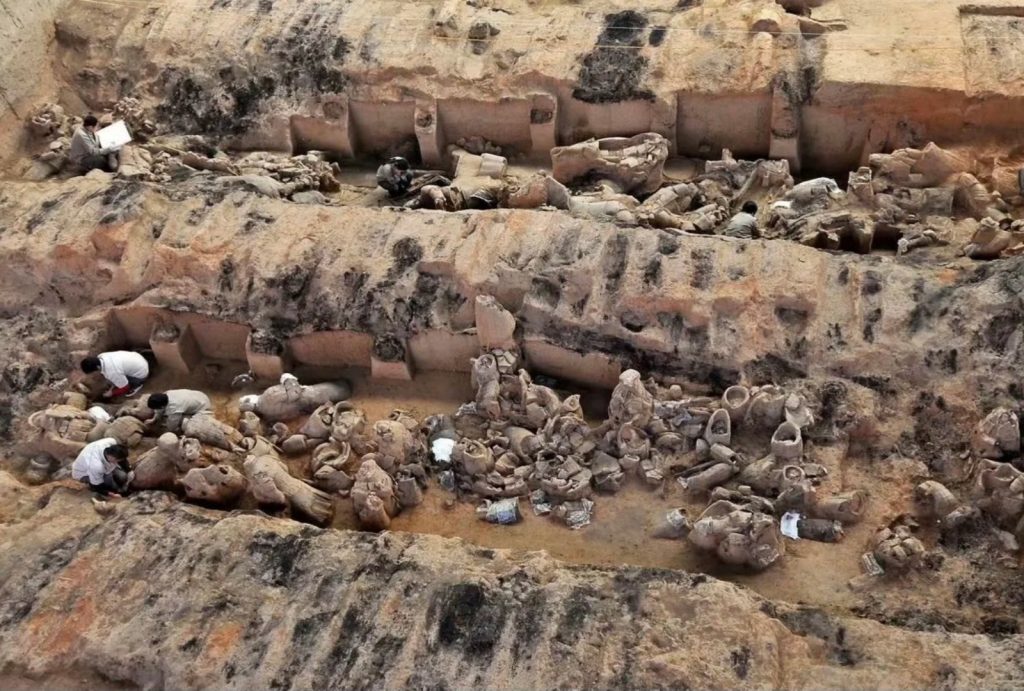
- Violently Smashed Statues: The warriors did not just fall over from old age. Archaeologists found that many statues were intentionally smashed into thousands of tiny pieces. The damage was extremely severe near the ancient entrance ramps—exactly where an angry army would break in.
- Ancient Robber Tunnels: Experts discovered several ancient tunnels dug directly into the burial pits. These holes prove that ancient looters successfully broke into the underground palace to steal treasures and destroy the Emperor’s symbol of power.
Did Xiang Yu Destroy the Terracotta Army?
A leading historical theory points to the rebel general Xiang Yu as the prime suspect. Ancient texts record him capturing the Qin capital and burning its imperial palaces. However, while excavations reveal clear fire damage in the pits, there is no direct written proof that his army was responsible for burning the Terracotta Warriors.
Today, historians and archaeologists debate three main theories about who actually set the devastating fire:
- Suspect 1: Xiang Yu’s Army. His massive army deeply hated the Qin emperor, breached the capital, and desperately needed the real bronze weapons held by the clay soldiers.
- Suspect 2: Peasant Rebel Armies. Before Xiang Yu arrived, desperate peasant rebellions swept the nation. Oppressed by brutal laws, these angry farmers might have been the first to break into the pits, stealing weapons and destroying statues out of pure vengeance.
- Suspect 3: The Qin People Themselves (A Burial Ritual). Another captivating theory roots the fire in ancient burial customs. Because burning objects was believed to transport them to the afterlife, experts suggest Qin officials intentionally burned the pits. This fiery collapse may have been a final, grand ritual to deliver the army to the emperor’s spirit.
What Happened Over the Next 2,000 Years?
After the fires and destruction of the late Qin period, the Terracotta Army lay buried and forgotten for over 2,000 years. This long period of concealment, while protecting it from further human interference, also subjected it to the relentless forces of nature. the Terracotta Army slowly disappeared beneath the landscape.
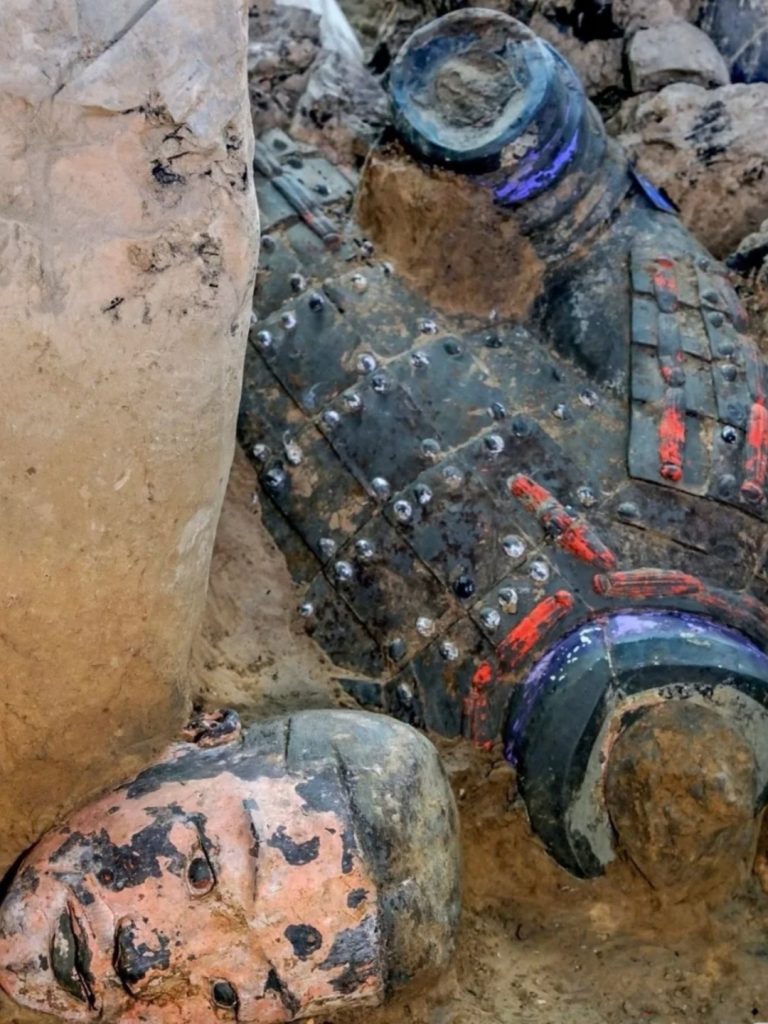
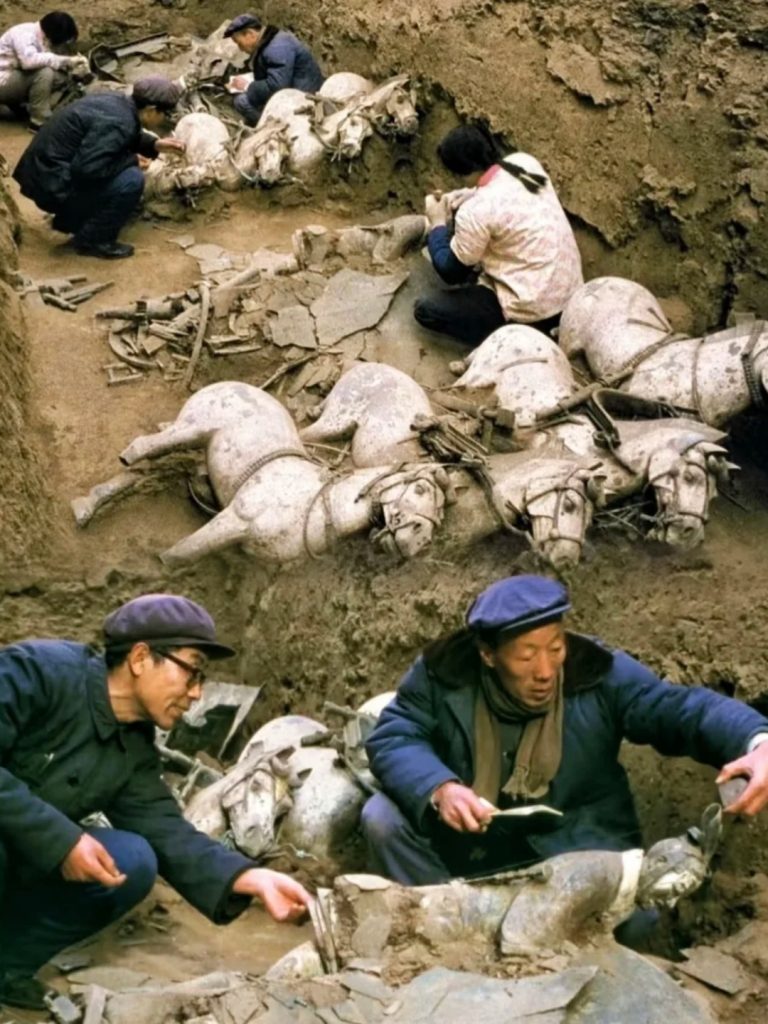
Over the centuries, local farmers in Xi’an sometimes dug up strange, broken clay arms or heads while working in their fields. Because they did not understand what these pieces were, some farmers thought they were cursed monsters and quickly threw them away. The army slept quietly in the dark until it was discovered in 1974. A group of farmers digging a water well finally hit a clay head and shocked the entire world. Since then, archaeologists and conservators have carefully excavated and meticulously restored thousands of fragmented soldiers, piecing them back together to preserve the Terracotta Army for future generations.
Today, standing before the Terracotta Army is a true historical miracle. Although ancient fires and collapsing roofs shattered the statues, the earth safely hid their broken pieces for over 2,000 years. Seeing these carefully restored warriors face-to-face is a rare privilege and a breathtaking gift from the ancient world.