

How Many More Terracotta Warriors Are Yet to Be Discovered?
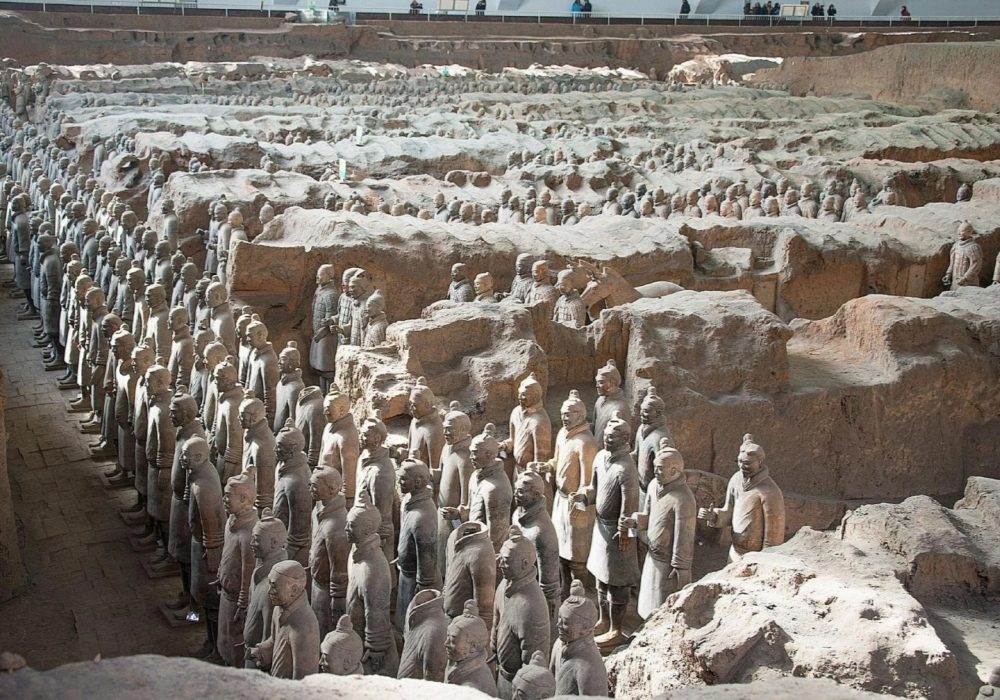
Standing at the edge of Pit 1 at the Terracotta Army, it’s easy to think you’re seeing the entire army. In reality, what’s on display is only a fraction of what remains buried. One of the most fascinating facts about the Terracotta Warriors isn’t just what has been unearthed—it’s what is still hiding in the dark.
How Many Terracotta Warriors have been Discovered?
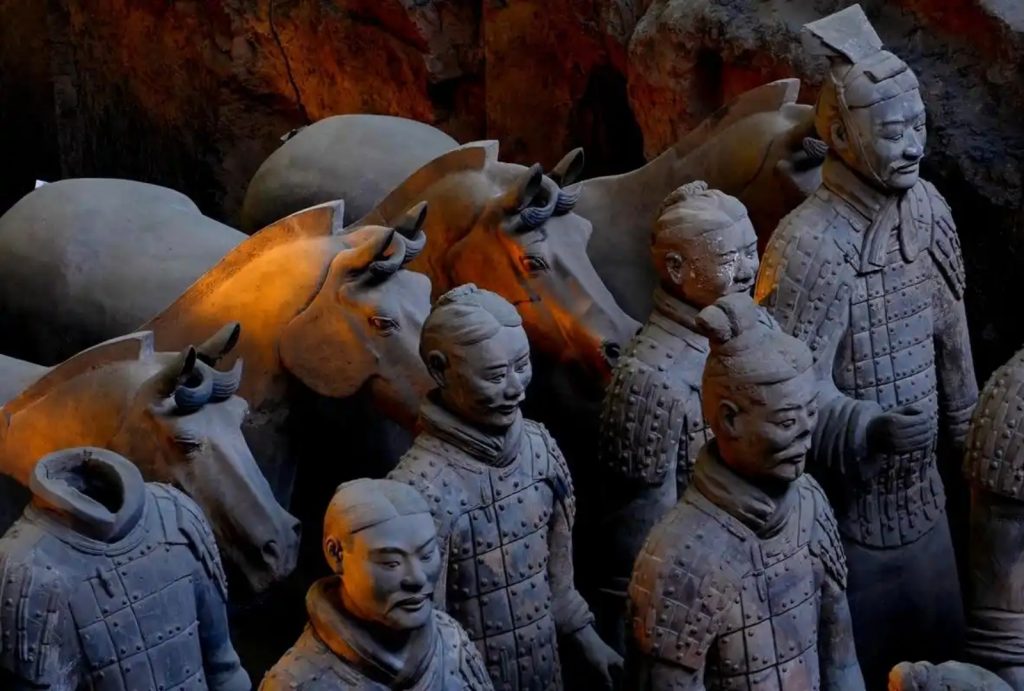
As of early 2026, archaeologists have uncovered about 8,000 life-sized figures in the Terracotta Army, including soldiers, horses, and charioteers. However, this is only a partial count. The full mausoleum complex of Qin Shi Huang spans an estimated 56–98 square kilometers, suggesting that many more figures and structures remain buried and undiscovered.
How Much of the Terracotta Army is Still Buried?
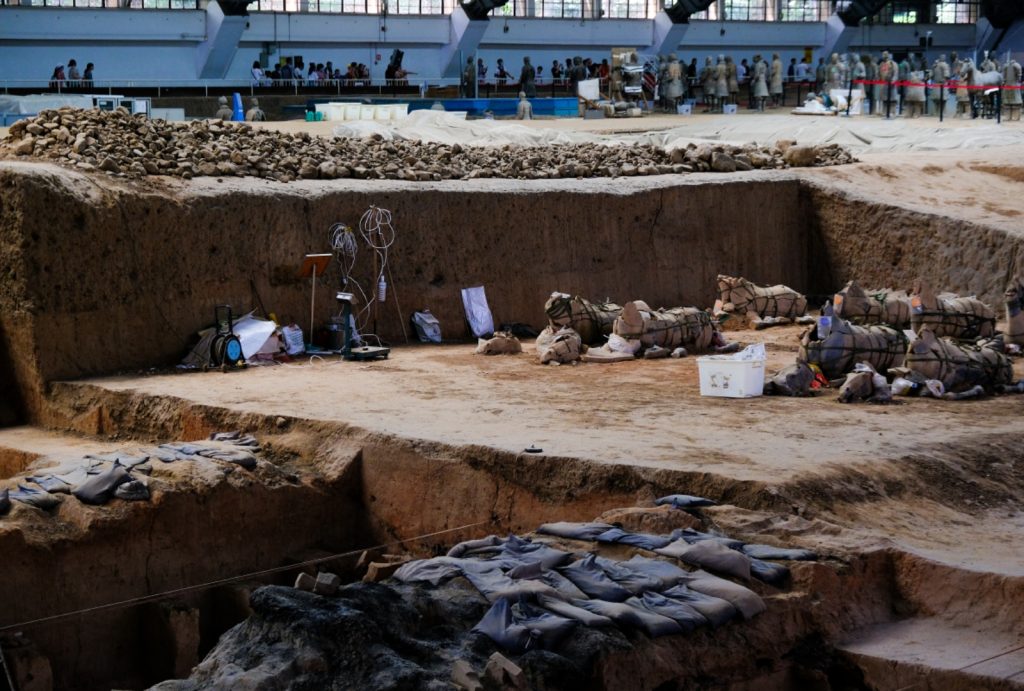
While the three main pits currently on display are breathtaking, they represent only a small fraction of what still lies beneath the soil of Xi’an. In reality, of the estimated 8,000 total figures, only about 2,000 have been fully unearthed and restored. This means that nearly 75% of the army remains entombed in the earth.
- Pit 1 of museum: This is the colossal hangar you see in all the famous panoramic photos. It is estimated to hold over 6,000 troops and 50 war chariots. To date, archaeologists have only unearthed about 2,000 of them. That means the soil at the back and sides of this single pit still hides over 4,000 unexcavated soldiers.
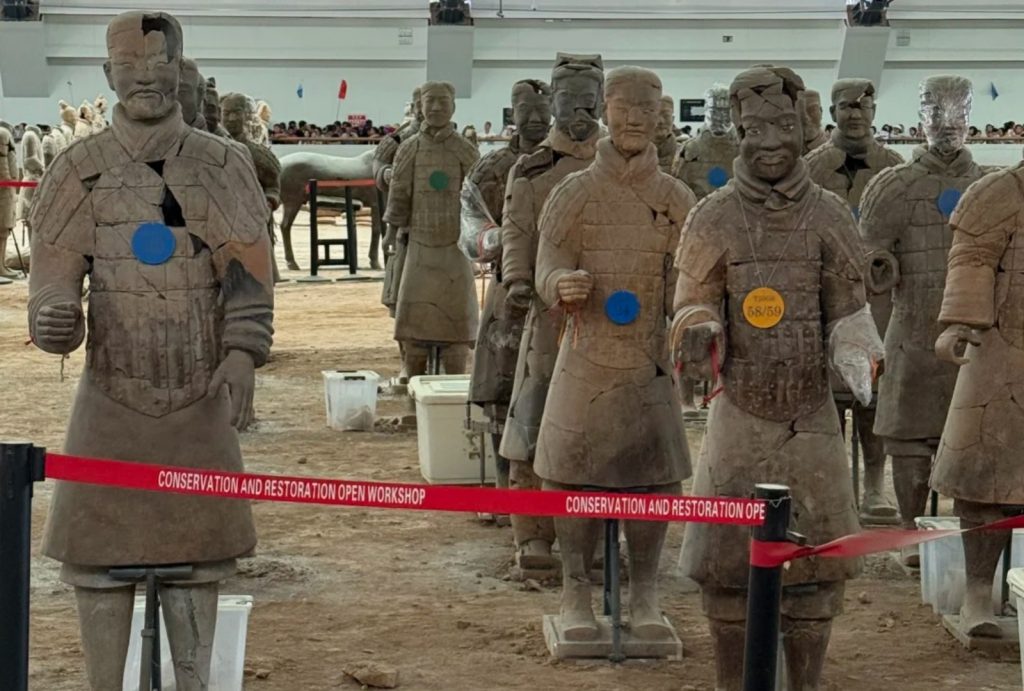
- Pit 2: This pit contains approximately 1,300 professional soldiers, including kneeling archers and cavalry—this pit boasts warriors with the best-preserved original pigments. To protect these fragile colors from air exposure, large-scale excavation was deliberately halted, the vast majority of the terracotta warriors remain buried.
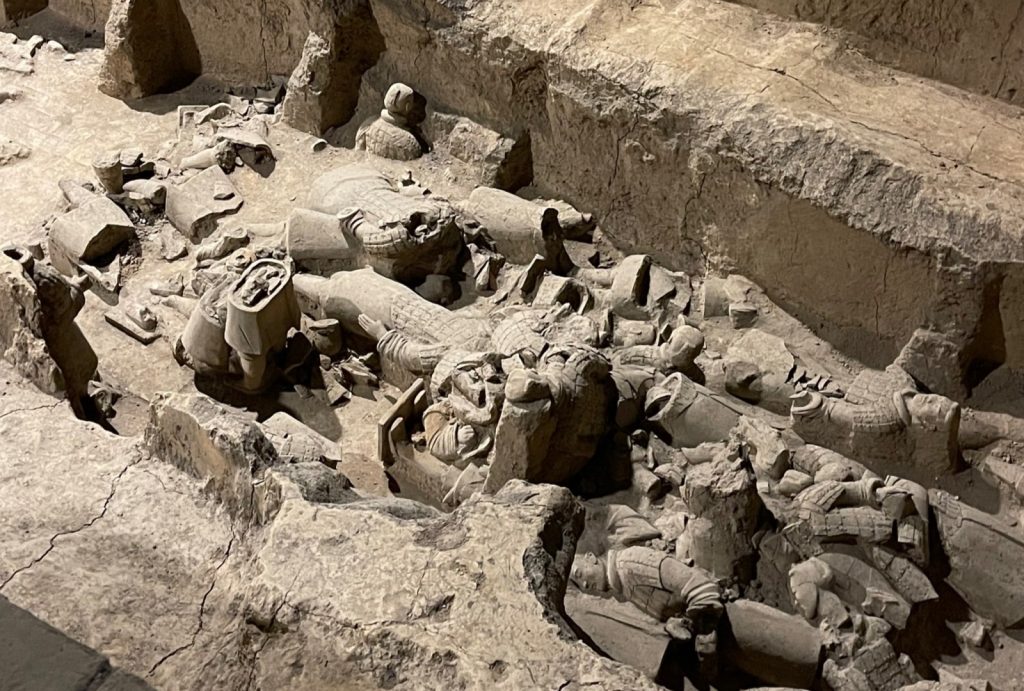
- The Emperor’s Tomb: The main tomb of Qin Shi Huang remains completely sealed. Ancient texts describe an underground palace with flowing rivers of toxic mercury—a claim backed by modern soil readings. Deemed too risky to excavate today, this untouched tomb likely hides unimaginable treasures and undiscovered terracotta figures.
Why not Continue Excavating the Terracotta Warriors?
One of the most frequently asked questions by visitors is why archaeologists don’t simply “dig up everything”. The answer lies in a complex interplay of preservation challenges, technological limitations, and deep cultural respect.
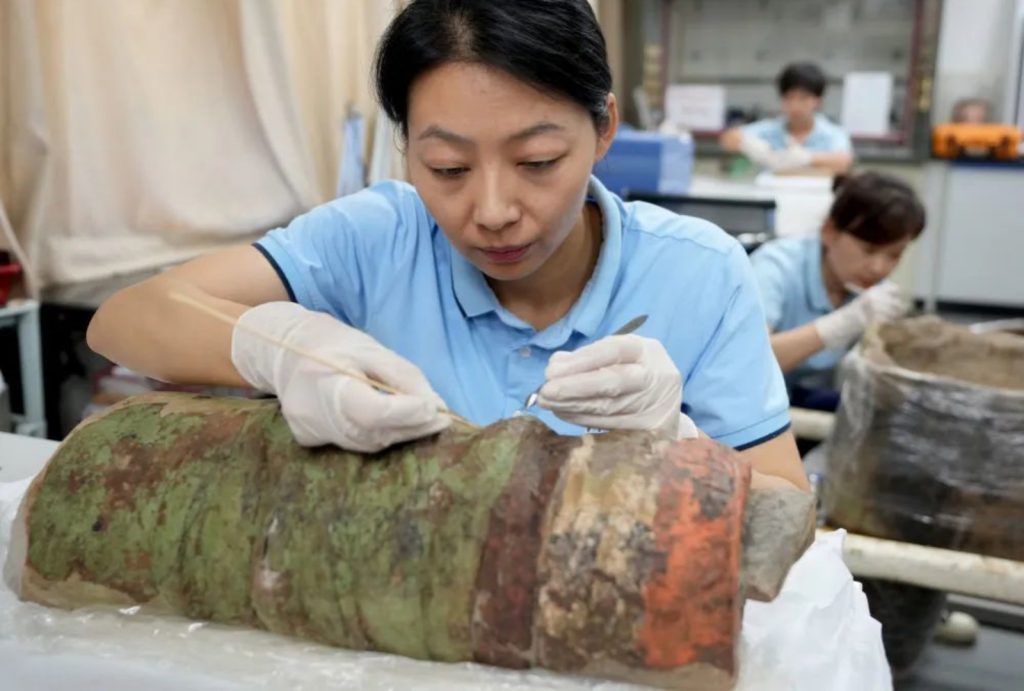
- Color Preservation: The original vivid pigments are extremely sensitive to humidity and can flake off within 15 seconds of being exposed to modern air. This phenomenon is precisely why Terracotta Warriors are found no colors.
- Technological Patience: Archaeologists prioritize a “preservation first” philosophy, waiting for advanced technology that can guarantee the 100% survival of the original artifacts.
- Cultural Respect and Danger: Excavation is limited out of deep respect for the Emperor’s final resting place and the potential physical perils, such as toxic mercury and ancient booby traps.
Understanding that over 6,000 Terracotta Warriors are still sleeping beneath your feet completely changes how you view this ancient site. It transforms the museum from a simple display of clay statues into one of the most exciting, active archaeological mysteries on the planet. This means you’re not just exploring an ancient site—you’re witnessing a discovery that is still unfolding.