
Why Do Terracotta Warriors Have Different Hairstyles?
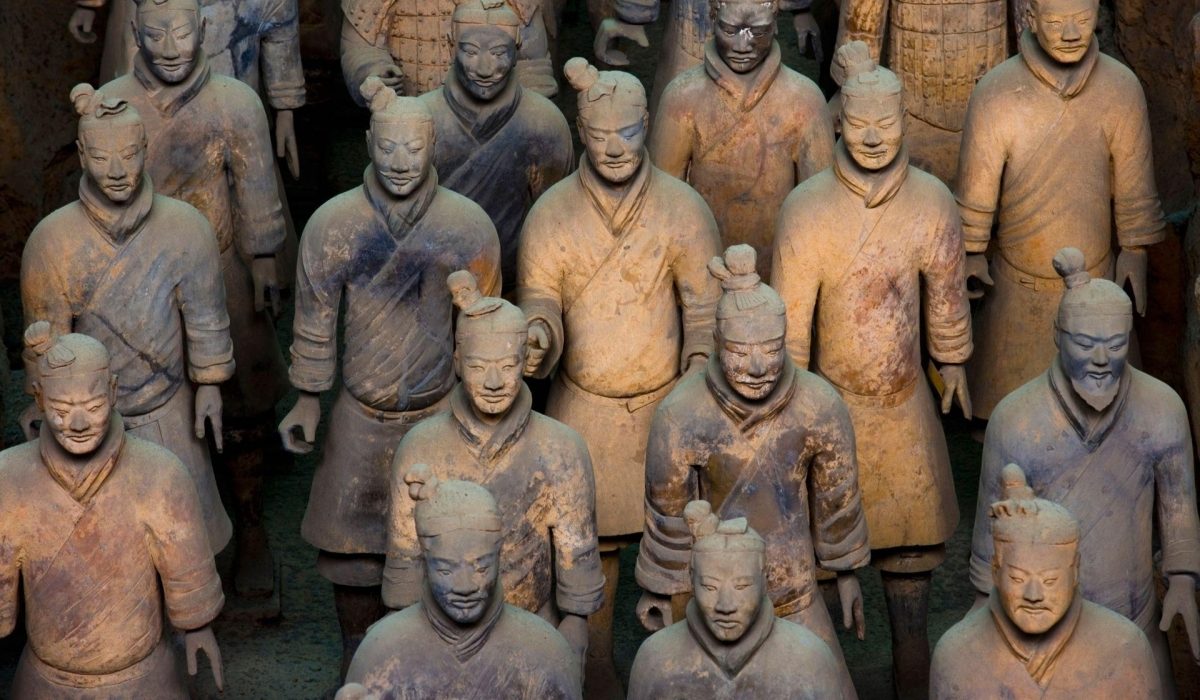
When travelers visit the Terracotta Army in Xi’an, the unique faces of the Terracotta Warriors captivate most visitors. However, if you look slightly higher, you will discover another astonishing historical detail. The Terracotta Warriors sport a fascinating, complex variety of hairstyles. Why did Emperor Qin Shi Huang‘s artists spend so much time carving hair? These intricate hairstyles were never just for fashion. Each topknot and braid acts as a strict military code, revealing a soldier’s exact rank and role within the Qin army.
The Significance of Hairstyle in Ancient China
To understand the hairstyles, you must know one rule of ancient China: hair was considered profoundly sacred.
Viewed as a gift from your parents, cutting it was deeply disrespectful to your ancestors, meaning men grew their hair extremely long. However, loose hair is deadly in close combat—it blinds you and gives enemies an easy grip. To survive, Qin soldiers had to tie their hair up, but exactly how they tied it was strictly dictated by military law.
Hairstyles Show Military Rank and Role
Terracotta Army is a perfect, life-sized copy of the real Qin Dynasty military. Just as modern soldiers wear badges and stripes to display their rank, these ancient warriors used a strict combination of armor, headgear, and hairstyles to show exactly who was in charge.
- Infantry & Archers:
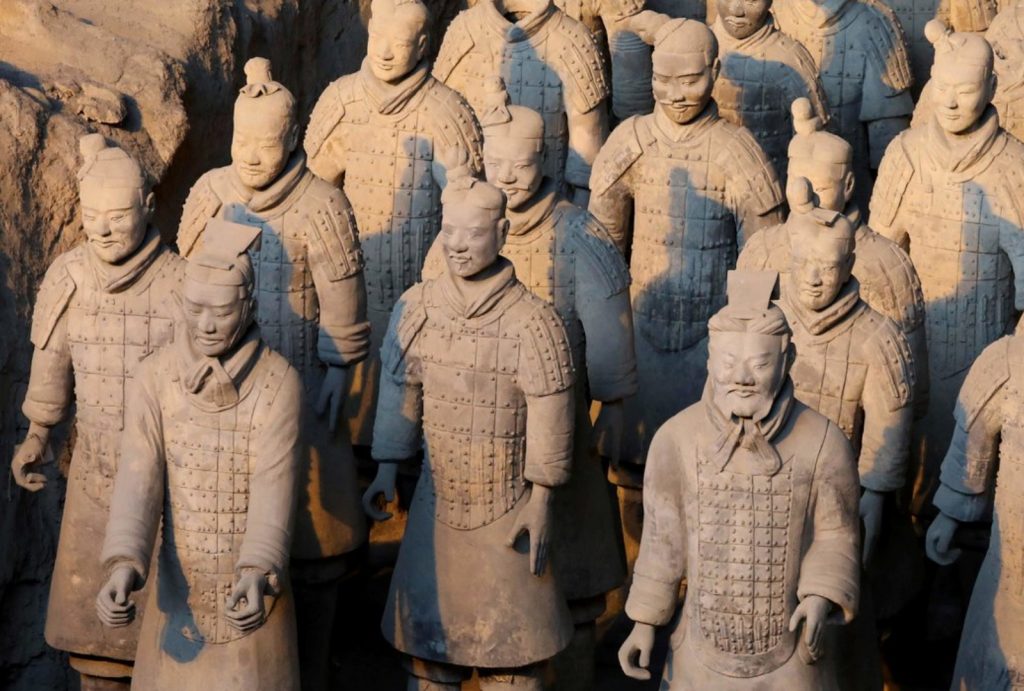
The vast majority of common soldiers wear highly practical styles, most notably a topknot slanted to the right side of the head. Secured with a simple headband, this asymmetrical design served a vital battlefield purpose: keeping long hair out of their eyes and safely away from their bowstrings. Combined with basic flat buns and a complete lack of crowns, this utilitarian look instantly identifies their rank-and-file status.
- Generals and senior officers:
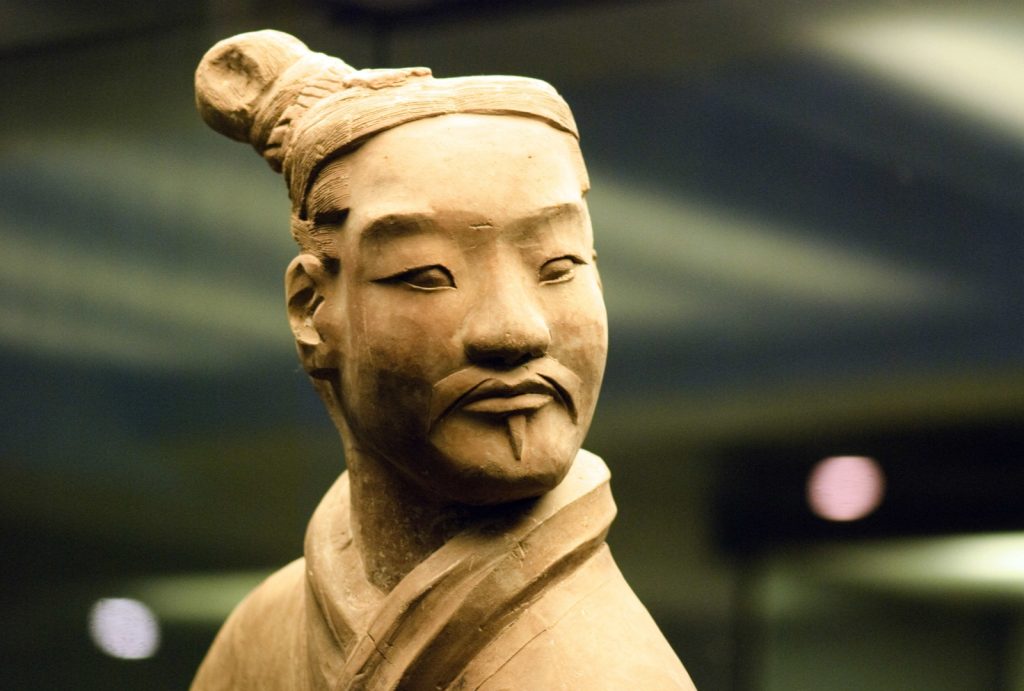
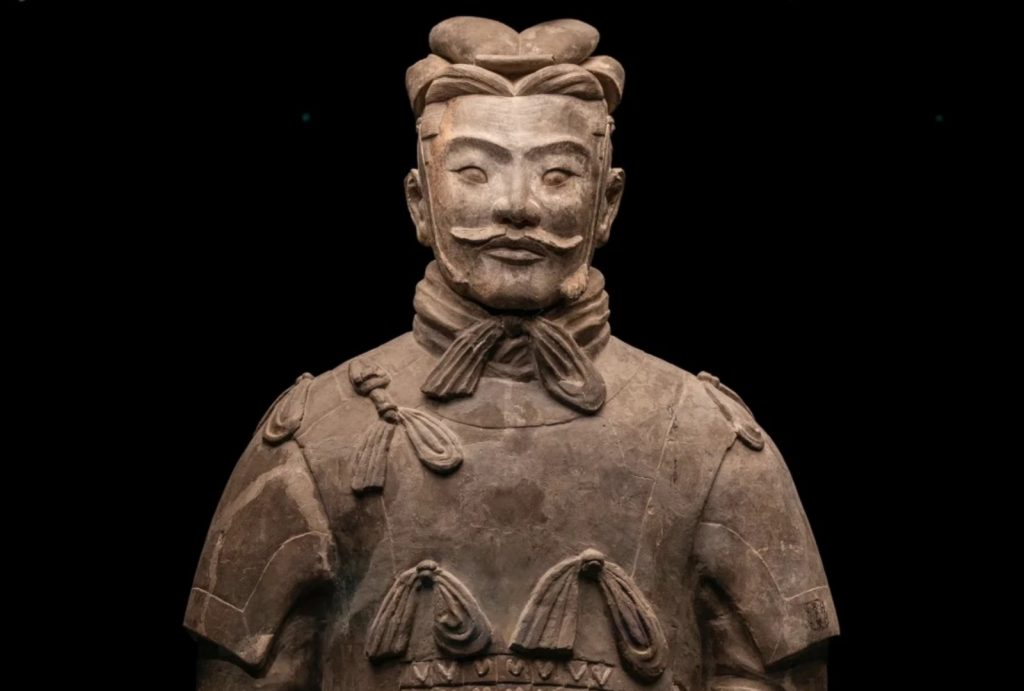
You can instantly spot an elite general just by looking at the top of his head. Symbolizing supreme leadership, these commanders wear magnificent armor and a complex, double-looped topknot once tied with vibrant ribbons. Out of all the excavated warriors, archaeologists have only found a very small number of these elite generals.
- The Cavalry and Charioteers:
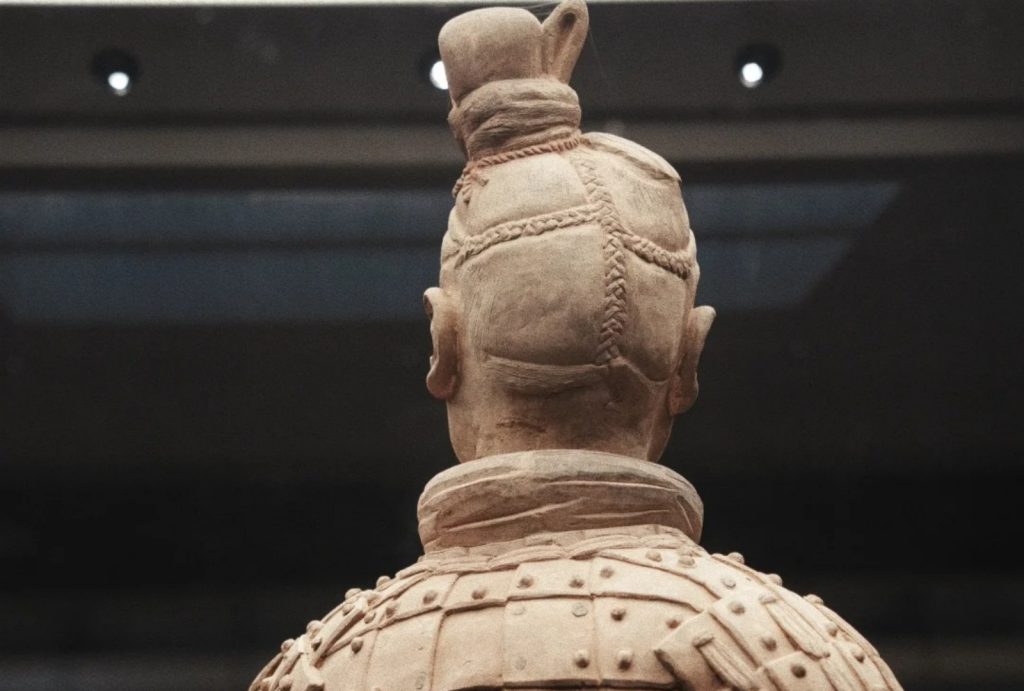
Highly mobile troops needed entirely different gear for high-speed combat. Instead of bulky topknots, cavalrymen and chariot drivers wore tight-fitting leather caps—similar to modern pillbox hats—to secure their hair against the wind. To ensure a snug fit, their long hair was meticulously parted, woven into flat, intricate braids, and pinned tightly to the back of their skulls.
How Did Ancient Craftsmen Create So Many Different Hairstyles?
Beyond military rank, the staggering variety of hairstyles comes down to extraordinary ancient craftsmanship. The Qin workshops operated like an ingenious assembly line, blending mass production with meticulous hand-carving:
- Step 1 The Basic Molds: Workers first pressed wet clay into just eight standard head molds to create a uniform skull and face.
- Step 2 The Clay “Canvas”: Once the basic head was molded, artisans applied a fresh, thin layer of fine, wet clay over the top of the skull. This soft, wet layer acted as a blank canvas for the artists.
- Step 3 Hand-Carving Details: Master artisans took over, using simple bamboo tools to painstakingly sculpt individual hair strands, weave crisscrossing braids, and shape complex topknots into the wet clay.
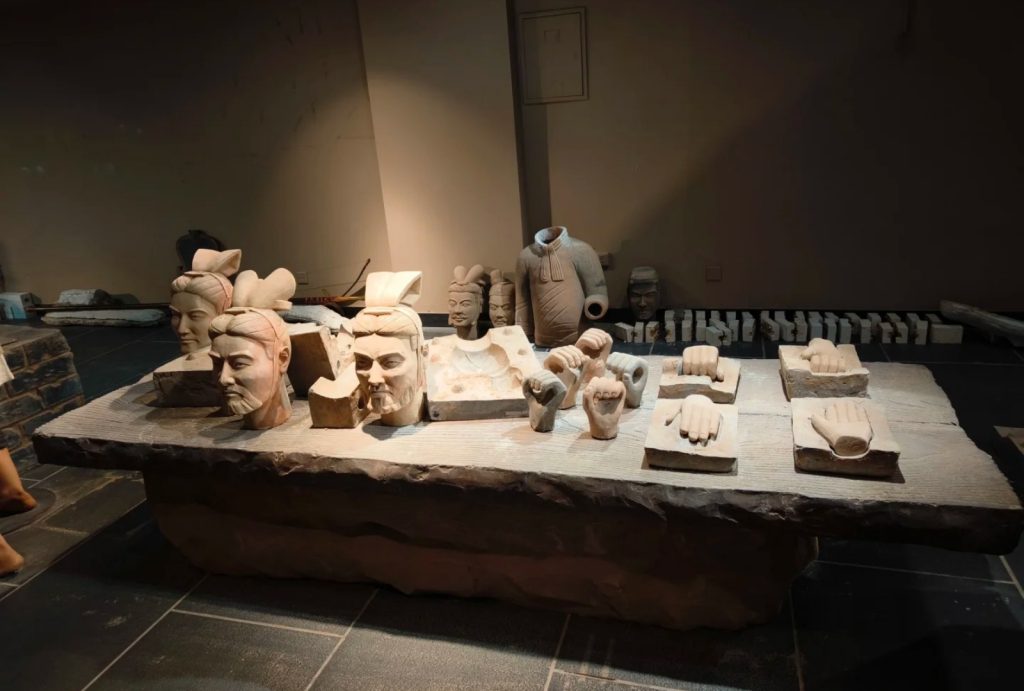
Since every braid, ribbon, and bun was hand-sculpted rather than machine-stamped, no two warriors are exactly alike. This ingenious method allowed the Emperor to quickly assemble his massive army while granting every single soldier a unique, lifelike identity.
While famous for its massive scale, the Terracotta Warriors’s true genius lies in its microscopic details. Hand-carving intricate braids and topknots for 8,000 soldiers destined to be buried forever is a staggering testament to the Qin Dynasty’s dedication to perfection. Far from mere art, these hairstyles are a 2,200-year-old military handbook carved in clay, revealing the exact ranks, roles, and diverse faces of China’s first unified empire.