

How Do Archaeologists Restore Broken Terracotta Warriors?
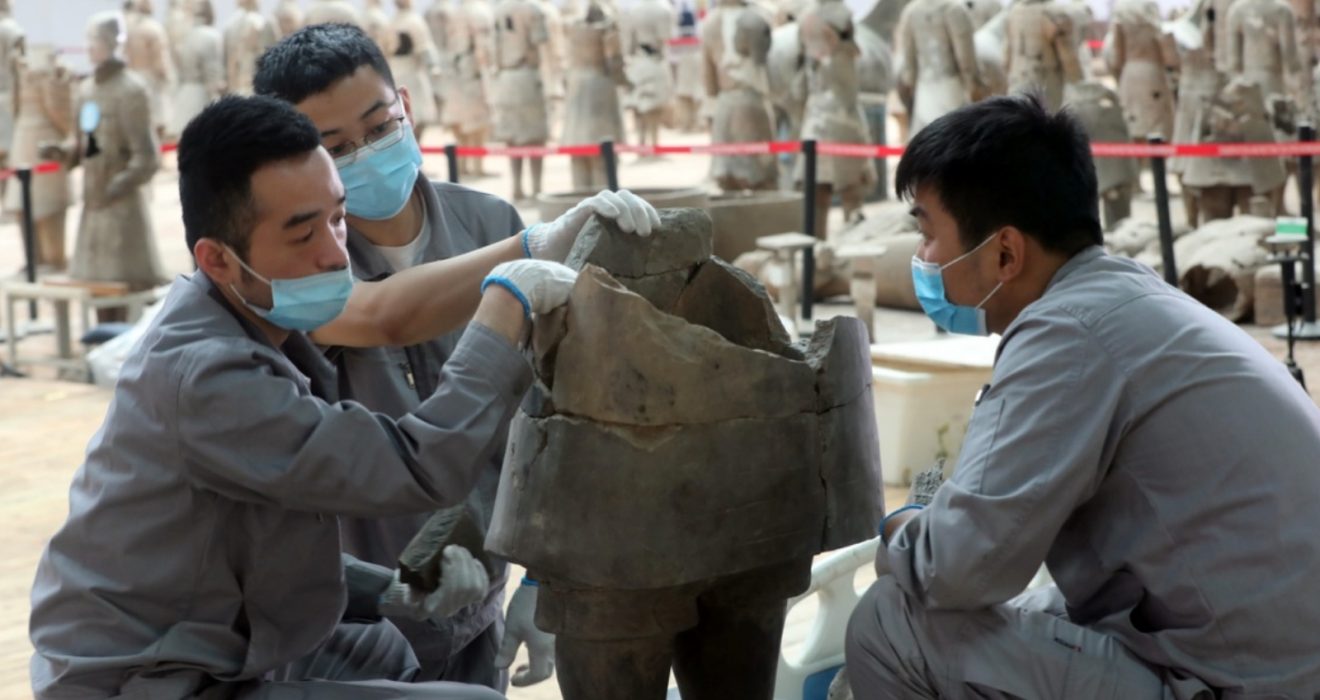
While the Terracotta Warriors standing today are awe-inspiring, the reality is surprising: almost none were discovered intact or upright. Transforming a pile of broken clay into a magnificent ancient soldier is one of the greatest challenges in modern archaeology. This guide will help you understand how experts restore broken Terracotta Warriors.
Why Are the Terracotta Warriors Broken in the First Place?
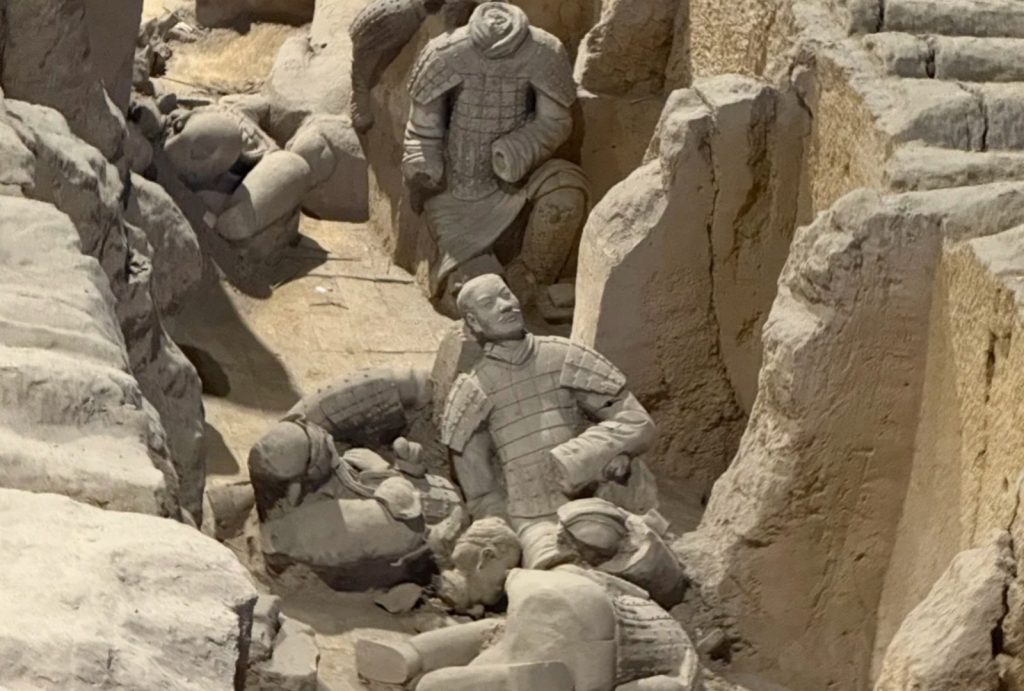
Before exploring how the warriors are restored, it is important to understand what happened to the Terracotta Warriors in the first place. After the fall of the Qin Dynasty over 2,000 years ago, widespread rebellion and warfare caused severe damage to the mausoleum. During this chaos, many warriors were shattered, and original weapons such as bronze swords and spears were destroyed or looted.
Through careful soil testing and site excavation, scientists have proven that the warriors were destroyed by a combination of human violence and natural forces:
- Burned wooden remains and ash layers
- Collapsed Wooden Roofs in the Pits
- Natural damage over more than 2,000 years underground
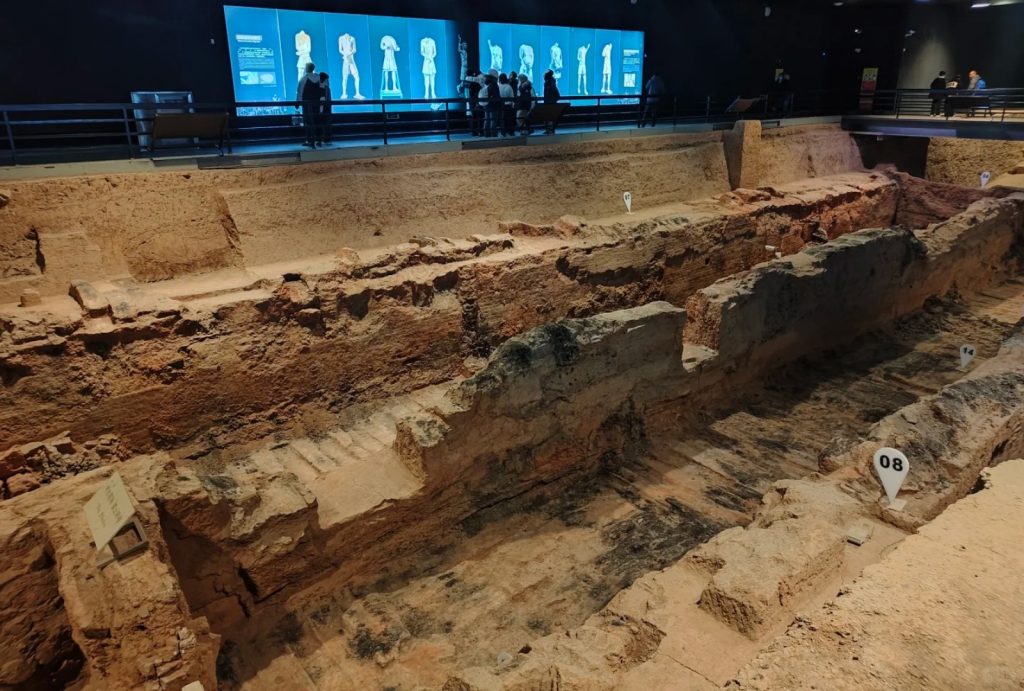
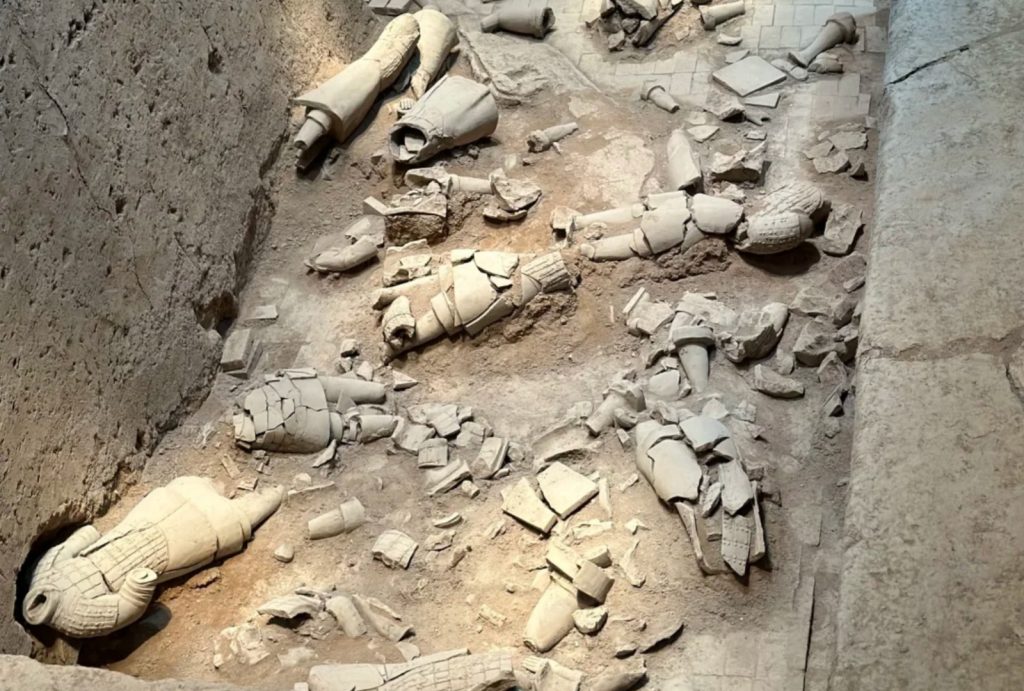
When the burning wooden roofs collapsed, tons of earth crashed onto the clay army. Together with soil pressure and ancient earthquakes, the beautifully painted warriors were violently crushed. When archaeologists excavate them, a single figure often appears as hundreds of broken fragments mixed with heavy mud.
How Archaeologists Record and Collect the Fragments
The restoration of the Terracotta Army begins long before any fragments are glued together. It starts at the moment a piece is uncovered during excavation.
- Documentation and Protection: Each fragment is carefully photographed and mapped before removal. This record helps researchers understand how the statues originally stood and how they later collapsed. If traces of original paint are found, conservators quickly spray a protective solution and cover the area with plastic film to prevent the fragile pigments from flaking after exposure to air.
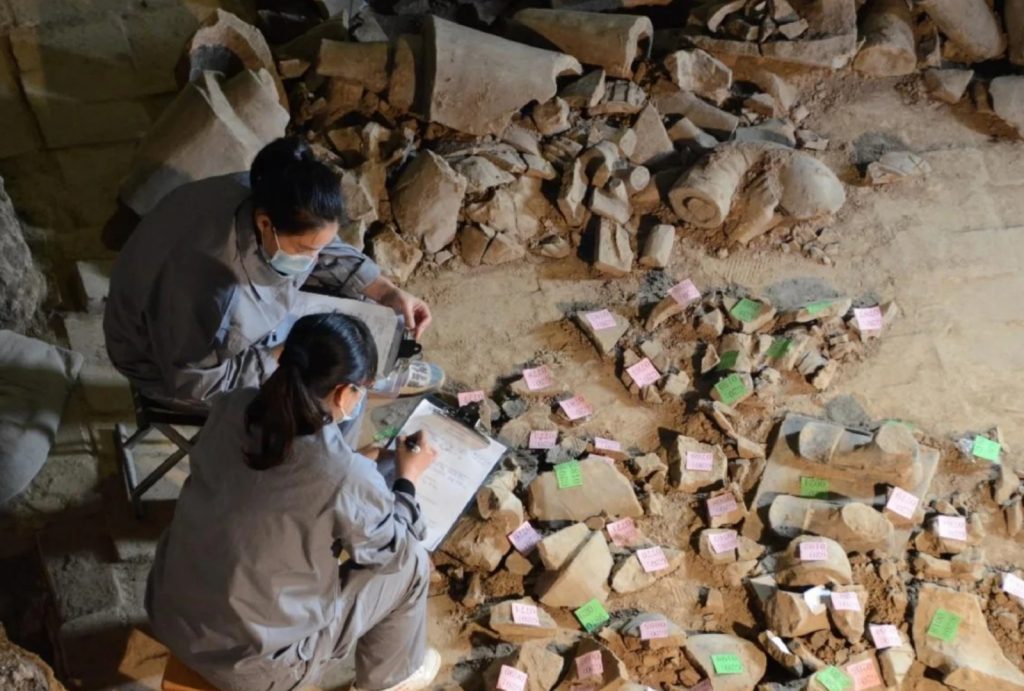
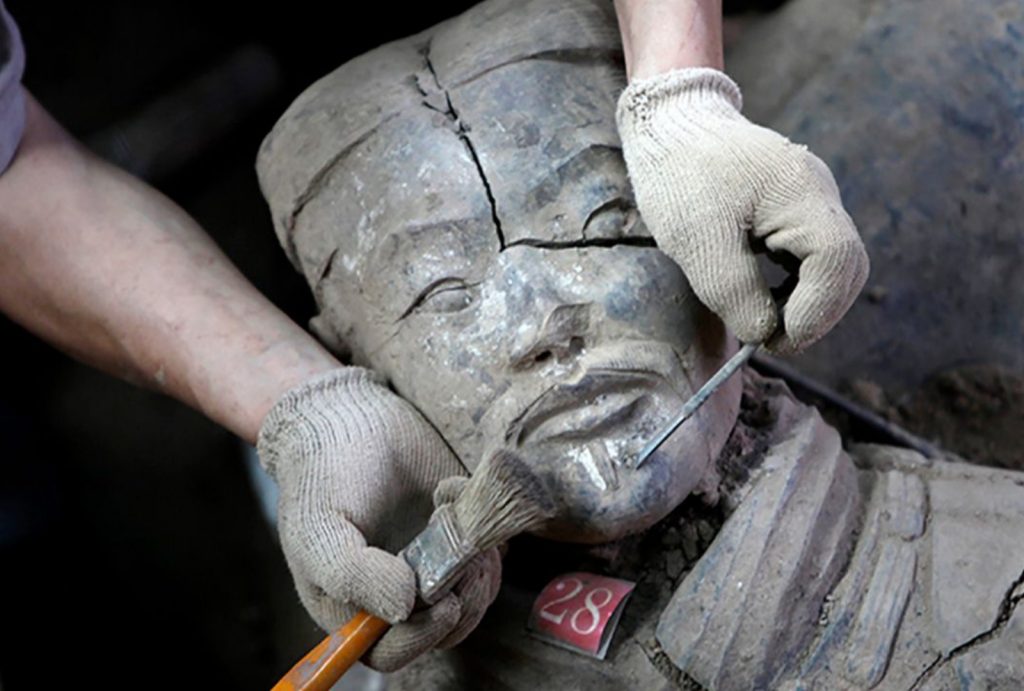
- Careful Extraction and Cataloging: Archaeologists use delicate tools such as bamboo slips, scalpels, and soft brushes to remove soil around the fragments. Every piece is labeled with a unique number and recorded in a database, allowing researchers to match fragments that may be found months or even years later.
The Detailed Restoration Process of the Terracotta Warriors
After the fragments are documented and organized, conservators begin the long process of rebuilding the statues.
1. Splicing and Assembling
The core of the restoration involves piecing together the shattered parts. Restorers sort through tables of broken pieces, matching them by clay thickness, firing color, and the carved lines of armor. Because every warrior has unique facial features and details, correctly fitting the fragments together requires both technical expertise and careful observation.
2. Reinforcing the Clay
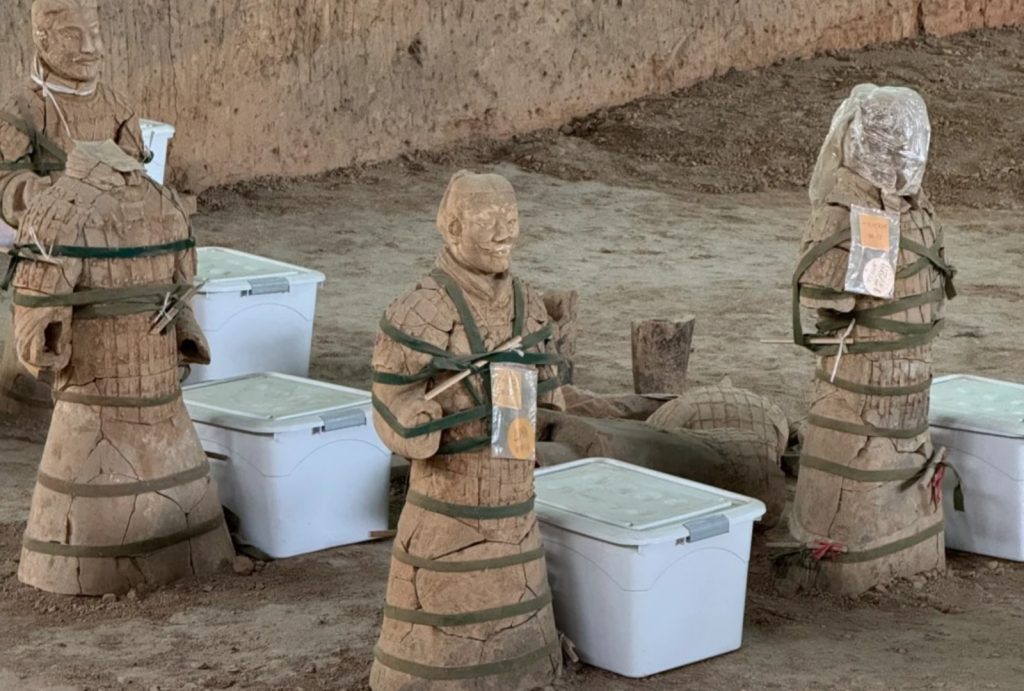
Once the matching pieces are found, they are bonded together using highly specialized, reversible epoxy resins. Because these statues weigh around 200 kilograms (440 lbs), simple glue is not enough. Restorers use complex systems of external clamps, heavy-duty straps, and sometimes internal supports to hold the heavy clay pieces tightly together while the adhesive cures.
3. Complementing and Patching
When original fragments are permanently lost, restorers carefully fill the gaps using modern plaster or specialized resin. Following strict international archaeological standards, these modern patches are intentionally tinted to blend in from a distance but remain slightly off-color up close. This ensures that visitors and future scientists can always easily tell the difference between the 2,200-year-old original clay and the modern repair work.
Why Is the Restoration of the Terracotta Warriors So Slow?
On average, it takes a team of highly skilled experts months or even years to fully restore just one single Terracotta Warrior. Several factors contribute to this extended timeline:
1. The Scale and Complexity of the Fragments
Each warrior, horse, or chariot unearthed is typically found in hundreds, sometimes even thousands, of shattered pieces. With no reference images or instruction manuals, this forensic-level restoration is the ultimate 3D puzzle. Matching a single broken finger can take days of trial and error, and some crucial pieces aren’t unearthed for years. Reassembling this massive ancient army remains a monumental test of patience.
2. Fragile Relics and Technological Limits
Broken clay is fragile, but the real challenge is the paint. Visitors are often shocked to learn the statues were once brightly colored. The main reason why the Terracotta Army lost its colors is that the ancient pigments sit on a delicate lacquer base. When exposed to dry air, this layer quickly curls and flakes off. To save any surviving paint, experts must meticulously treat the fragments in strict, climate-controlled labs.
3. The Strict Rules of Restoration
Backed by years of training, multidisciplinary teams of experts restore the warriors using the ethical principle of “minimal intervention.” Rather than faking missing parts to create a perfect statue, they only stabilize the original clay. Any modern repairs are clearly marked so future scholars can tell the difference. This meticulous, slow process ensures that what you see today is 100% authentic history.
4. The Experts Behind the Army
It takes years of rigorous training before a conservator is permitted to touch an original terracotta fragment. Today, multidisciplinary teams of scientists and archaeologists collaborate on every single piece. This meticulous handwork makes the restoration process inherently slow, but ensures the ancient army is preserved flawlessly.
Every single restored Terracotta Warrior you see today is the result of hundreds of hours of painstaking work by dedicated archaeologists. After sleeping in darkness for over 2,000 years, this magnificent Qin army stands proudly once again. When you visit the museum, you are not just looking at ancient history; you are witnessing a true modern masterpiece of preservation.