
Why Terracotta Warriors are Found No Colors?
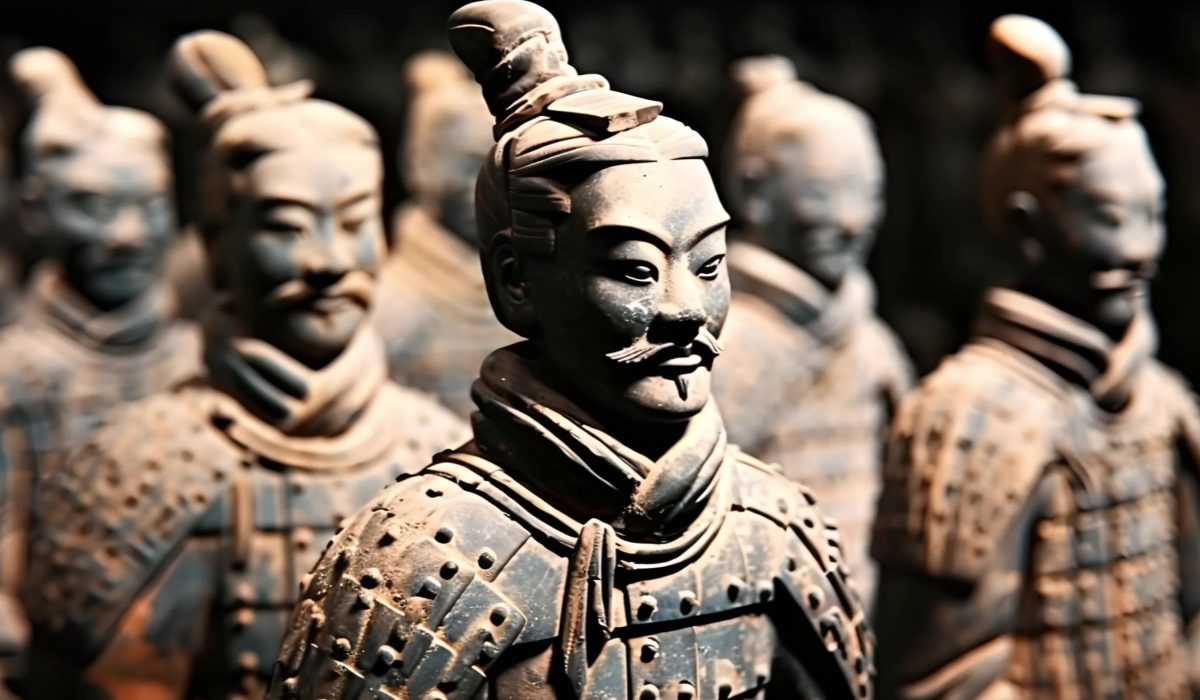
When you search for images of the Terracotta Warriors, you see rows of earthy, brownish-grey soldiers. When you visit the Terracotta Army Museum in Xi’an, you see the same monochrome army. It is a common misconception that this “clay color” was their original look. The truth is far more vibrant.
What Were the Original Colors of the Terracotta Army?
When the Terracotta Army was first created for Emperor Qin Shi Huang, Every single warrior was beautifully-colored. Far from the uniform grey we see today, each warrior was an individual masterpiece of ancient artistry.
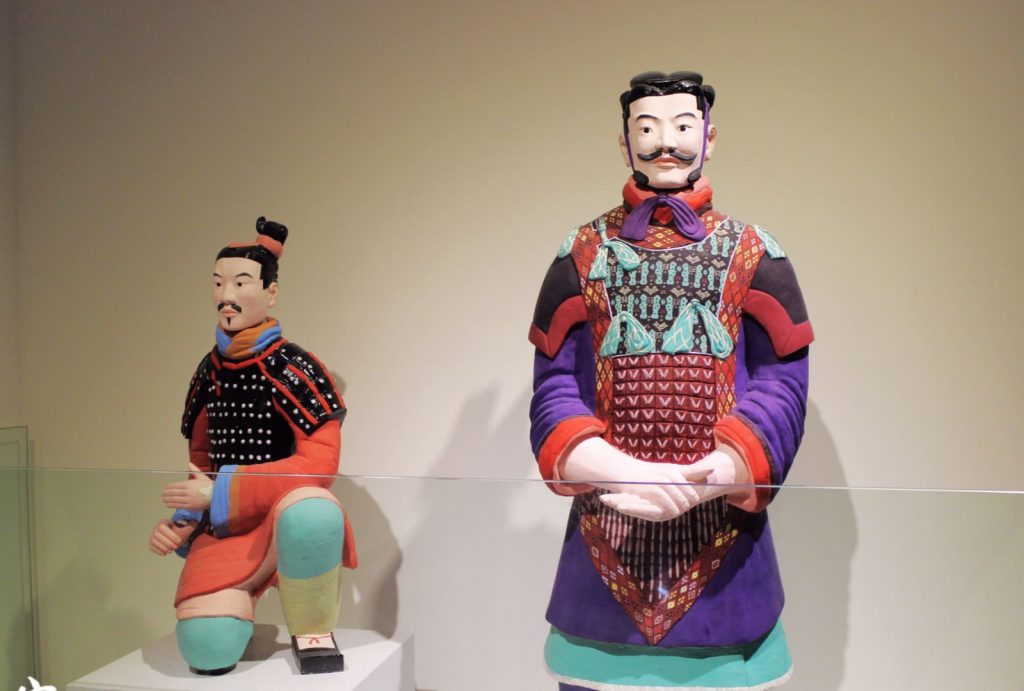
Archaeological research has revealed pigments such as:
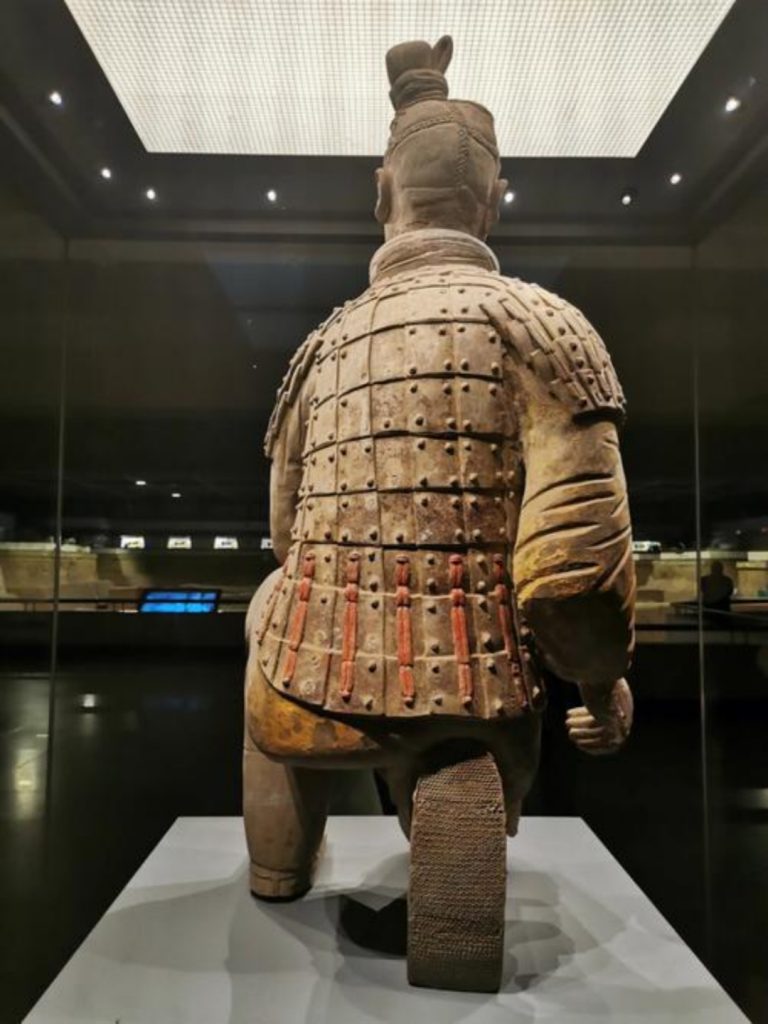
- Reds (Vermilion): Sourced from cinnabar, this vibrant hue was frequently used for armor ties and belts to symbolize vitality and power.
- Greens & Blues: Created from ground gemstones (Malachite and Azurite), these colors were often used on robes and horse gear.
- Han Purple: A rare, synthetic pigment (man-made) often reserved for high-ranking officers and intricate accessories.
- Pinks: Delicately used to mimic realistic skin tones on faces and hands.
- Black & White: Black and white formed the base of realism, defining hair, facial features, and details, while armor was often painted in black or brown tones.
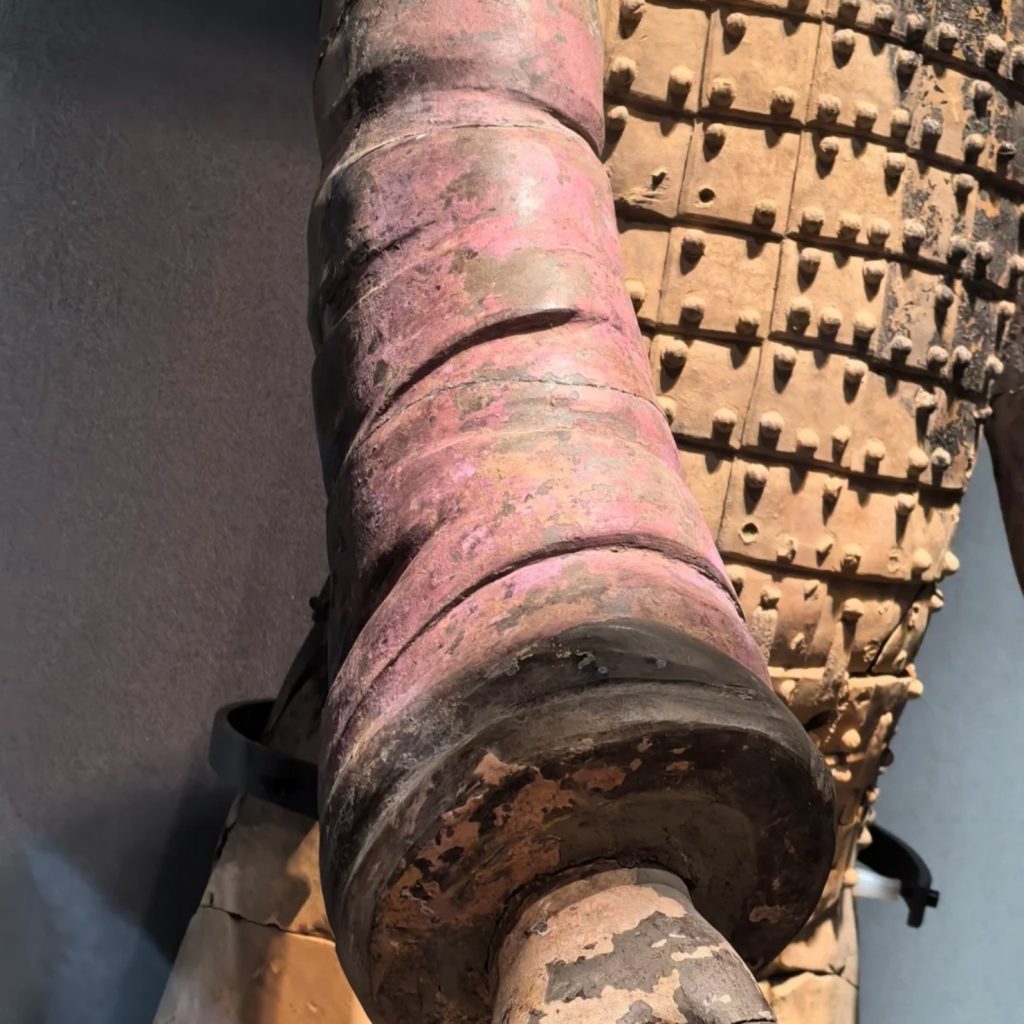
Why Did the Terracotta Warriors Lose Their Color?
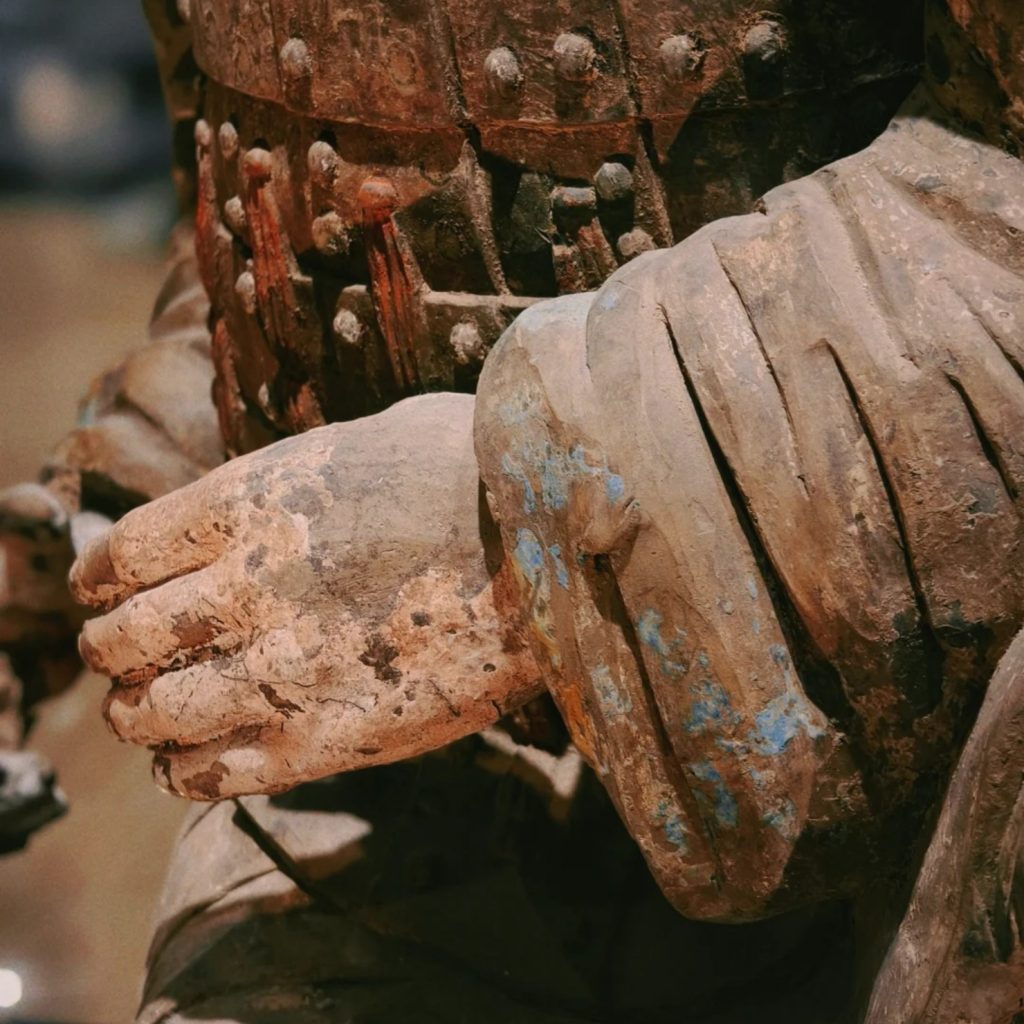
The color-fading of the Terracotta Army is one of the biggest questions for visitors and a major challenge for archaeologists(to preserve the color today). Surprisingly, some of the colors didn’t fade though over 2,000 years had passed. Instead, when they are unearthed today, the color is lost in a sudden, dramatic moment, as quick as within an eye blink.
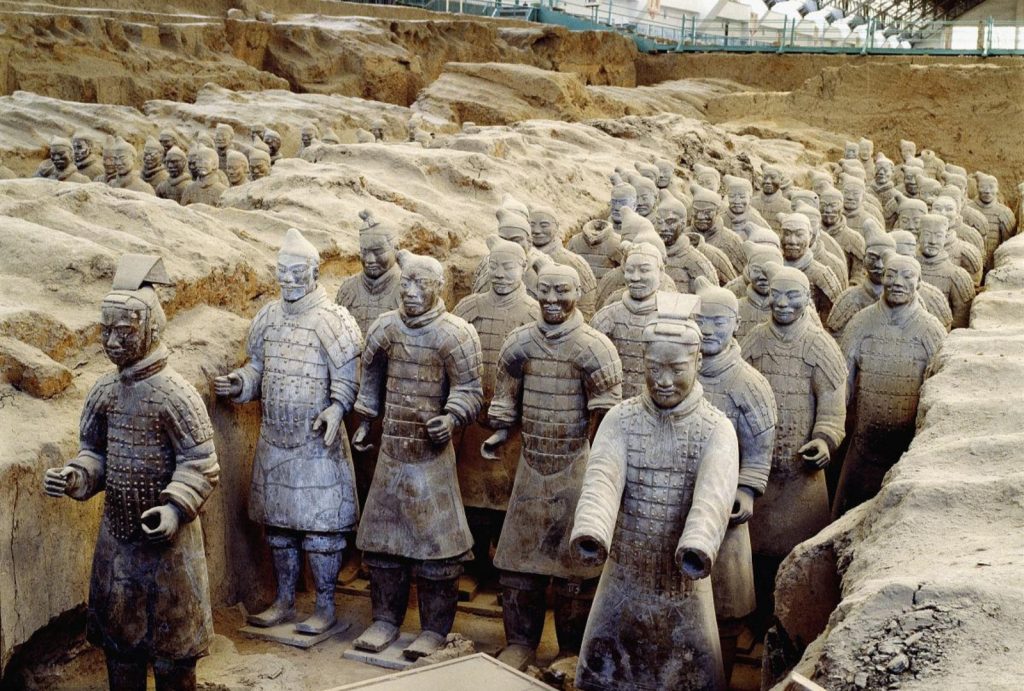
1. Sudden Exposure to Dry Air
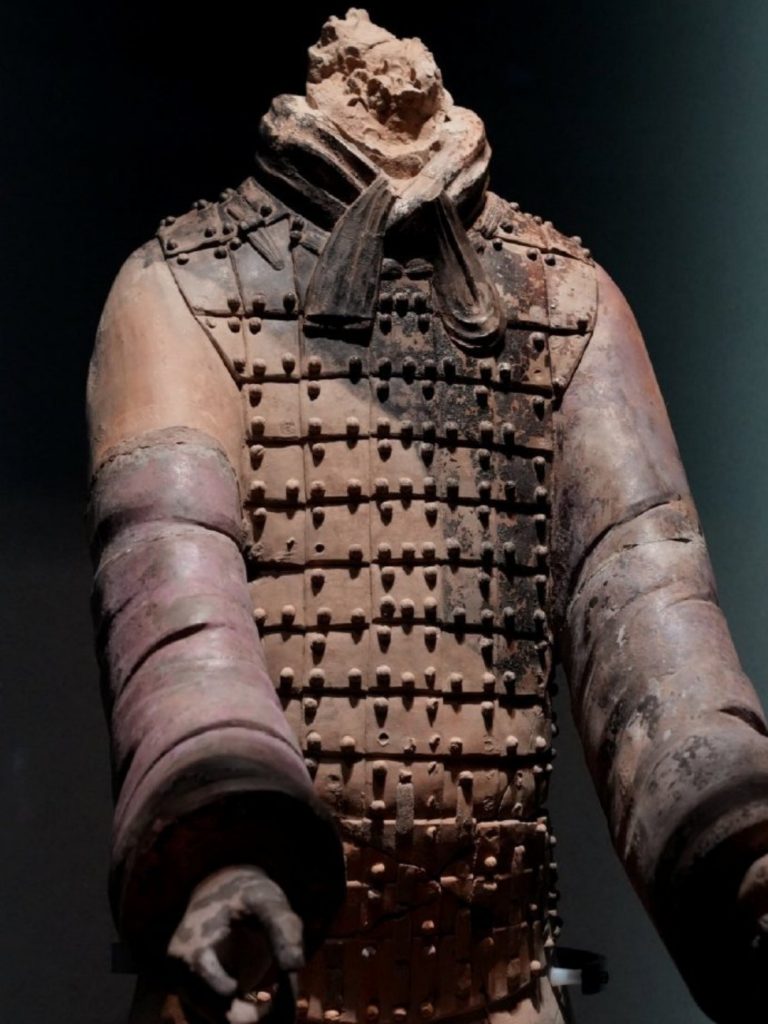
This was the main cause. The paint was attached to the clay with a layer of lacquer (a natural varnish). After 2,000 years underground, this layer was wet and swollen. When dug up and exposed to the dry air, the lacquer dried out instantly—shrinking, curling, and peeling off in just 15 seconds.
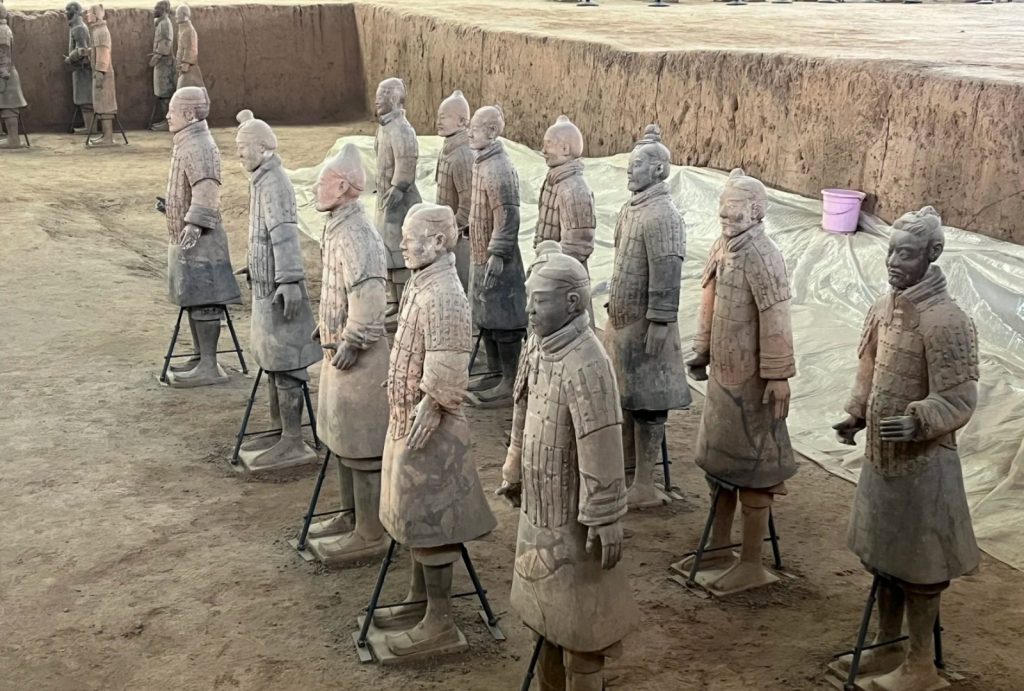
2. Reaction to Light and Oxygen
Some of the special colors, especially the man-made Purple, were chemically fragile. As soon as they touched fresh oxygen and sunlight, the pigments broke down and faded rapidly.
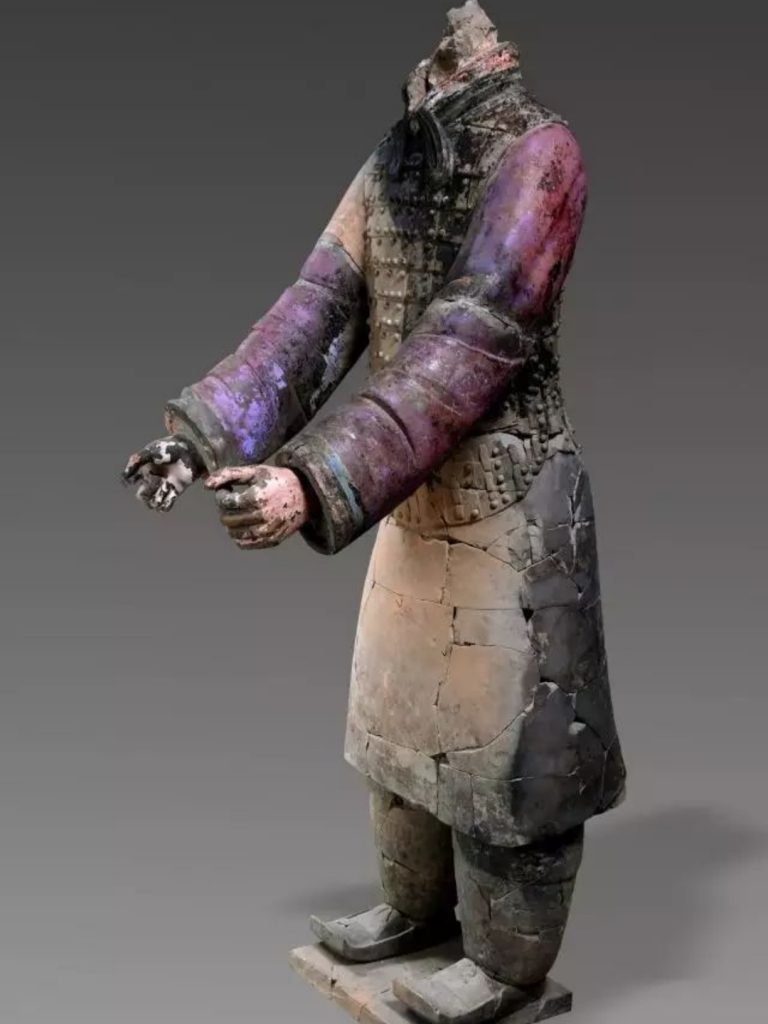
3. Damage from Soil and Bacteria
Nature also played a part. Salts in the soil turned into crystals as they dried, physically pushing the paint off the clay. At the same time, bacteria had been slowly eating the organic parts of the paint for centuries.
Where to See Preserved Colored Terracotta Warriors Today?
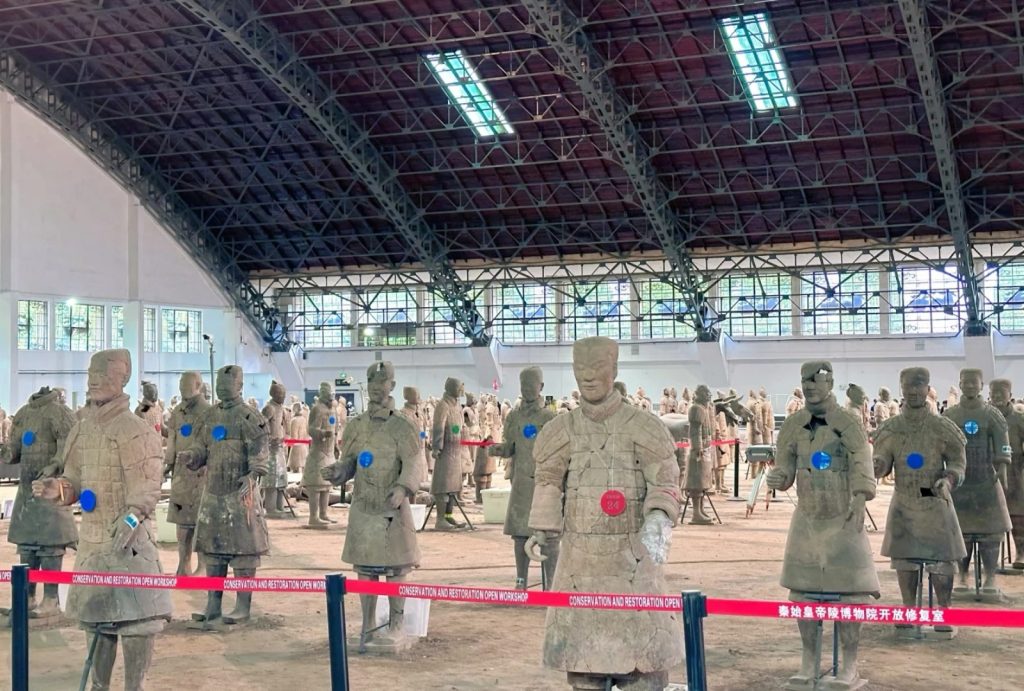
1. The “Warrior Hospital” in Pit 1 (Restoration Zone)
Most people just look at the front of Pit 1. But if you walk all the way to the rear (back) of the pit, you will see the Restoration Area.
- What to see: This is where archaeologists work daily. You can often see broken warriors being pieced back together. Because these figures are currently being treated, the colors on them (protected by chemicals) are often fresher and more visible than the ones standing in the front rows.
2. Pit 2: The Kneeling Archer
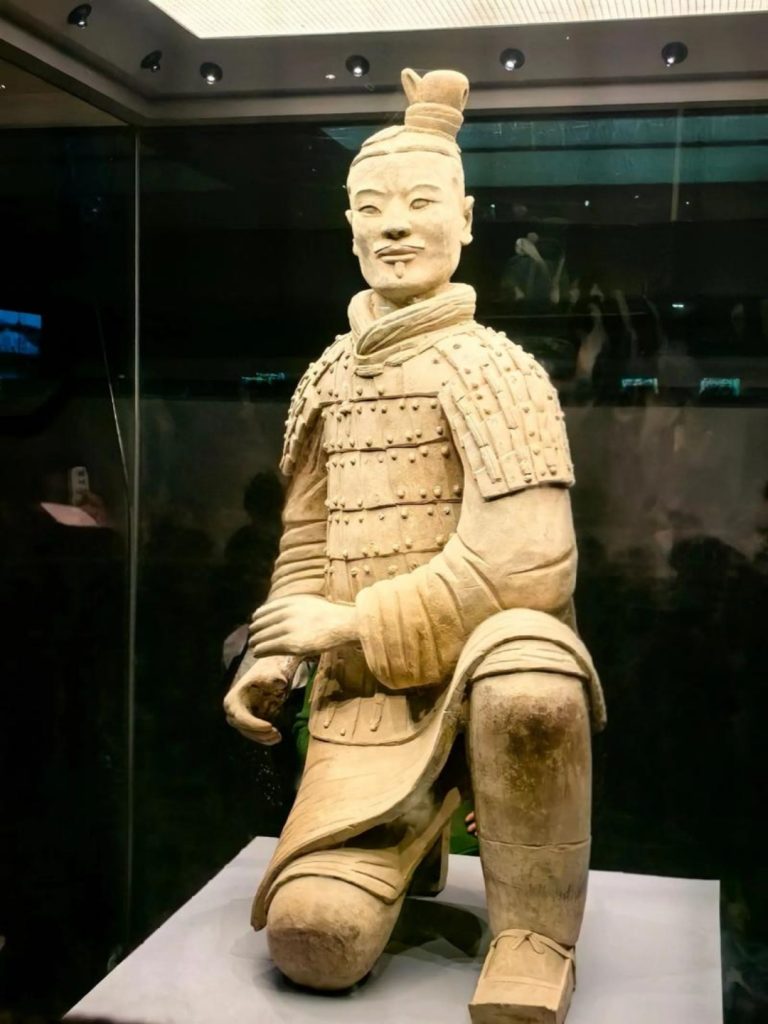
- Look for: The glass display cases on the north side of Pit 2.
- The Detail: The famous “Kneeling Archer” is kept here. Look closely at the soles of his shoes and the straps of his armor—you can clearly see the original red lacquer.
3. The 50th Anniversary Special Exhibition
Don’t miss the special exhibition halls (often located near the main entrance or the Bronze Chariot museum).
- The Highlight: To celebrate the 50th anniversary of the discovery (1974-2024), the museum often displays the “Green-Faced Warrior” or other rare, high-grade painted figures in special glass cases. These are the best-preserved examples of color you will ever see.
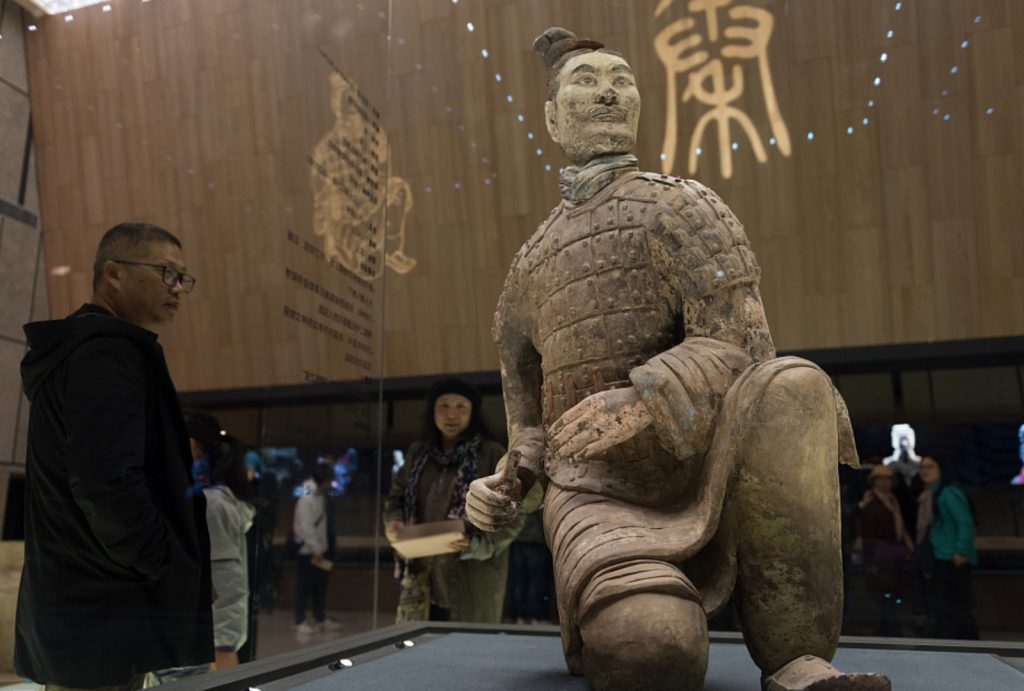
This exhibit sometimes includes painted replicas or original artifacts with preserved hues, offering another dimension to the army’s colorful legacy.
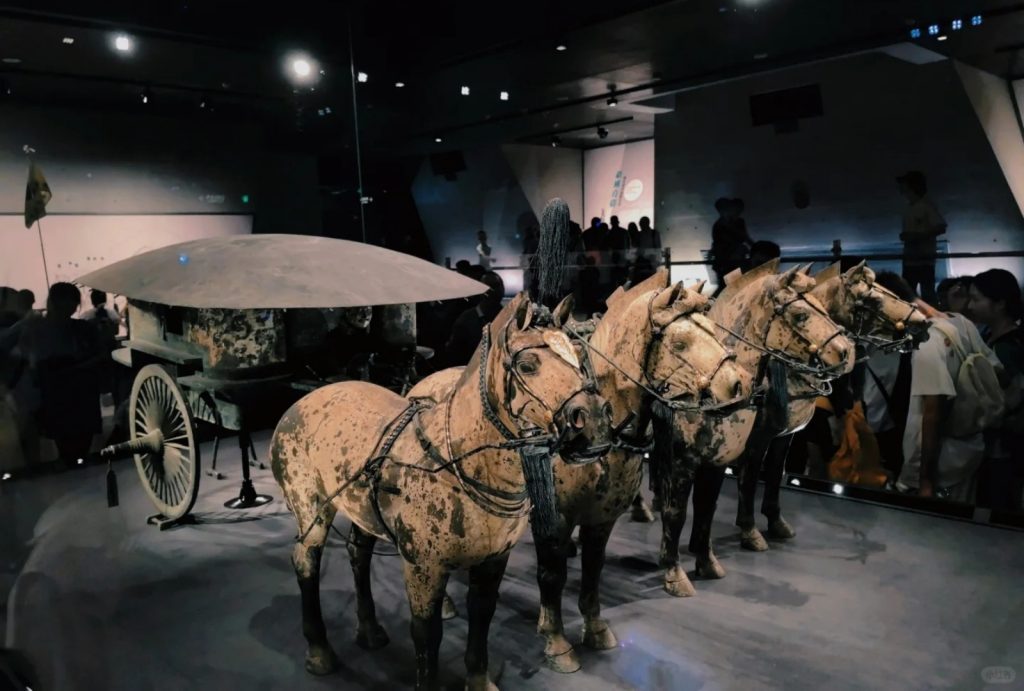
- Location: Important Update—The chariots are no longer in the main museum. You must take the free shuttle bus (included in your museum ticket) to Lishan Garden (The Emperor’s Mausoleum).
- The Color: Though the warriors are clay, these chariots are bronze—and richly painted. Look closely at the canopy and carriage walls to spot geometric and cloud patterns in blue, green, and white—some of the best-preserved Qin Dynasty paintings.
Though the Terracotta Warriors appear grey today, they were once vividly painted masterpieces. Their faded colors are the result of delicate ancient materials reacting to modern air after 2,000 years underground.
When visiting the Terracotta Army in Xi’an, imagine the army in brilliant reds, blues, and greens. Understanding the lost colors adds a deeper layer of meaning to one of China’s greatest archaeological treasures.